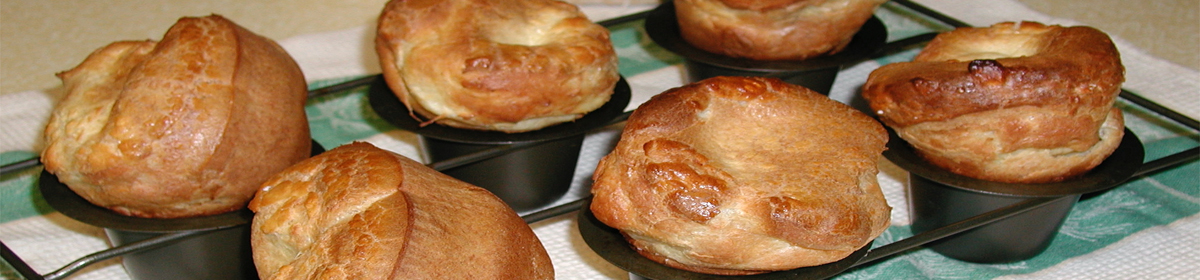
Joyce’s Sausage Pinwheels

My brother-in-law Merle was a regional credit manager for Phillips 66. As anyone in business will tell you, a sale is not complete until you have been paid. A credit manager’s job is to see that the company gets paid. This is not always easy. When Merle was transferred to a territory which included Alabama and Mississippi, he learned that the previous credit manager had asked for a transfer.

It seemed that a major petroleum jobber was persistently late on million-dollar invoices. The credit manager was just as persistent in reminding the jobber that Phillips expected invoices to be paid when due. Like one of “those good old boys” from back in the bayous, the jobber announced that he would be tempted to use the rifle hanging in the back window of his pickup the next time he heard another word about paying invoices on time.

I asked Merle how he handled the situation. “Well, the manager I replaced was a nice guy, and he wanted to keep both the customer and our sales department happy. The jobber was one of our biggest customers in the area. But he was earning interest on money that he owed Phillips 66, and Phillips could use that interest too.

“I spent a day looking over the filling stations in the area and decided that he needed Phillips just as much as we needed him, so I told him that if he didn’t start paying on time, I would stop deliveries until he got caught up. We got along just fine after that.”

As a mid-level manager for Phillips 66, Merle was expected to entertain colleagues and their wives from time to time. His wife, Joyce, had the job of providing the food. Here is a simple, savory appetizer that their guests always enjoyed, and Joyce shared it with Jerri.

INGREDIENTS:

2 cups all-purpose flour
1 tsp. salt
3 tsp. baking powder
5 T shortening
2/3 cup milk
1 lb. pork sausage

PROCEDURE:

Stir the flour, salt and baking powder together in a mixing bowl and cut in the shortening with a fork or pastry blender as if you were making biscuits. Add the milk to moisten the dry ingredients. If necessary, add a little more milk or flour so the dough is moist but not wet.

Turn the dough onto a floured surface and knead it briefly, just ten or twelve turns. Divide the dough in half and roll each half into a quarter inch thick rectangle. Spread the uncooked sausage evenly on the dough. Roll each rectangle as if you were making a jelly roll.

Cover the rolls and chill them for an hour to make them easier to slice. Preheat the oven to 400º.

Slice the rolls into quarter or half-inch rounds and put them a half inch apart on baking sheets. Bake the pinwheels for ten to twelve minutes until they are lightly browned. Serve them warm.

NOTES: Long after Merle retired, he and Joyce visited our cabin at Cable. As we drove Highway 63 north, Merle told us that he had checked a directory of Phillips 66 dealers after he learned that his sister was planning to marry a guy from Hayward. Until we crossed that beautiful river, he said, he had always assumed that Namekagon Oil Company was owned by Mr. Namekagon. The story still makes us smile.

Easy Masoor Dal

Rice and bread are both rather bland foods. If you are a vegetarian, you don’t have the option of adding chicken to that pot of rice or topping your bread with beef gravy or barbecued pork to add some flavor. That may partly explain why dal was invented by some imaginative cook on the Indian subcontinent thousands of years ago. The earliest references to vegetarianism from India are older than those from ancient Greece, which we find in the Odyssey, thought to have been composed about 800 B.C.

While never in the majority, a significant minority of ancient Greeks and Romans were vegetarians. The people of eastern and northern Europe who conquered the Roman Empire, however, were hunters who liked their venison. Vegetarianism virtually disappeared from Europe until the Renaissance when European scholars rediscovered the ancient philosophers of Greece and Rome.

Vegetarianism in the United States was practiced by a few small Christian communities in the 18th century, and a few notable Americans were vegetarians. Among them was Colonel Thomas Crafts Jr., who was the first person to read the brand new Declaration of Independence from the balcony of the old state house in Boston.

Another was Benjamin Franklin, who became a vegetarian at the age of sixteen, but later began eating meat again occasionally. Franklin has more to answer for than abandoning his youthful enthusiasm for vegetables or burdening us with wise sayings like “Eat to live, and not live to eat.” He introduced tofu to the American colonies in a letter to John Bartram in Philadelphia in 1770. He sent some soybeans and passed on instructions of how the Chinese made “tau-fu.”

India, where vegetarianism apparently originated, is home to most of the world’s vegetarians—at least 250,000,000 people. There are far fewer in the United States, but one of them happens to be our grandson.

He is the person who first told me about dal. Dal (also spelled daal, dhal or dahl) in Hindi may mean lentils or a thick spicy stew made with lentils. Masoor dal means red lentils. The lentils contribute some important proteins missing in rice and wheat, and the spices add interest to those bland foods. Therefore, dal is not only good for you, but also makes things taste good—a perfect combination.

With a quarter of a billion people eating dal in India, there may be a million different dal recipes. Here is one that is easy and delicious.

INGREDIENTS:

1 cup red lentils
2 cups water plus more if needed
3 T vegetable oil
1/2 cup finely chopped onion
1 1/2 inch piece of fresh ginger
2 cloves garlic
1 tsp. salt
1 tsp. ground turmeric
1/4 tsp. ground cayenne pepper
1 tsp. cumin seeds
1/2 tsp. garam masala
1/2 to 3/4 cup finely chopped tomato

PROCEDURE:

Rinse the lentils and put them in a two or three quart saucepan. Add about two cups of water, enough just to cover the lentils. Bring them to a boil, reduce the heat and simmer until the lentils are tender, about twenty minutes. Skim off any foam as the lentils cook. Add more water if necessary, so you end up with a thick soup. Remove the lentils from the heat until you are ready to add the spice mixture.

While the lentils are cooking, peel and mince the ginger root and garlic and finely chop the onion. Put about three tablespoons of vegetable oil into a small skillet. Stir in the onions and sauté them over moderate heat for three or four minutes until they are translucent but not browned.

Wash and finely chop a small to medium tomato while the onions are cooking.

Reduce the heat to low and add the minced ginger, garlic, salt, turmeric, cayenne and cumin seeds to the onions. Cook this spice mixture for four minutes, then stir in the chopped tomato. Continue simmering and stirring the mixture for another three or four minutes to soften the tomato.

Stir in the garam masala, then stir the spice mixture into the lentils and bring the dal to a simmer. Simmer it for a few minutes to blend the flavors, stirring often to prevent scorching. Taste and adjust the seasoning.

Serve over rice for a main dish or as a dip for eating with naan as an appetizer.

NOTES: The best places to find red lentils are food co-ops or Asian markets.

Some people add chopped cilantro and more spices to their dal. My advice is to start with this recipe and try adjusting it to suit your taste the next time you make it.

You can substitute butter for all or part of the oil for cooking the onions and spices.

Some recipes omit the garam masala, perhaps because like me, those cooks didn’t know what it was. It will, however, enhance the flavor of your dal.

Garam masala is a mixture of spices that Indian cooks make themselves or buy from a spice merchant. There are many versions ranging from mild to blazing hot. Curry powder, for instance, might be called a mild garam masala. Traditional garam masala starts with whole peppercorns and other seeds and spices which are toasted then ground into a powder, but you can make a pretty good imitation with spices you probably have in your spice rack.

This recipe makes about a quarter cup of medium hot garam masala.

INGREDIENTS:

1 T ground cumin
1 1/2 tsp. ground coriander
1 1/2 tsp. ground cardamom
1 1/2 tsp. ground black pepper
1 tsp. ground cinnamon
1/2 tsp. ground cloves
1/2 tsp. ground nutmeg

Mix the spices together very thoroughly and store the mixture in a cool, dry place.