Whole Wheat Banana Pancakes

Bananas were a special treat for us kids when I was growing up, so special that I tried to save a small banana that was the hot lunch dessert one day. I tucked it into my jeans pocket to take it home. After lunch I joined a bunch of guys in a softball game. As fate would have it, a line drive hit the banana pocket. I learned two important things from this event: First, bananas are pretty effective softball shock absorbers and second, removing a smashed banana from a pocket is a challenge.

I excused myself from the game and went to the boys’ bathroom where I discovered that I would have to take off my jeans, turn the pocket inside out and wash the offending mush away. The warning bell for afternoon classes rang while I was doing this, so about twenty guys came into the room to find me in my shorts scrubbing my pants in the lavatory.

They were not as amused as the girls in my class when I walked in with a big wet spot on the front of my jeans. Mrs. Coogan was very nice and did not quiz me about the matter, though she did look startled as I carefully walked to my desk near the front of the classroom.

And then I had to ride the bus home, accompanied by laughter and the odor of ripe bananas. My mother sympathized philosophically, “I’m sorry, but I hope you learned your lesson.” I did. I have never put a banana in a pocket again.

In spite of this embarrassing episode, I still thought well of bananas because we had them only once in a while. They were almost always available at the Co-op or A & P but they were expensive. When young people look at old supermarket advertisements and see bananas for fifteen cents a pound, they may wish bananas were that cheap today.

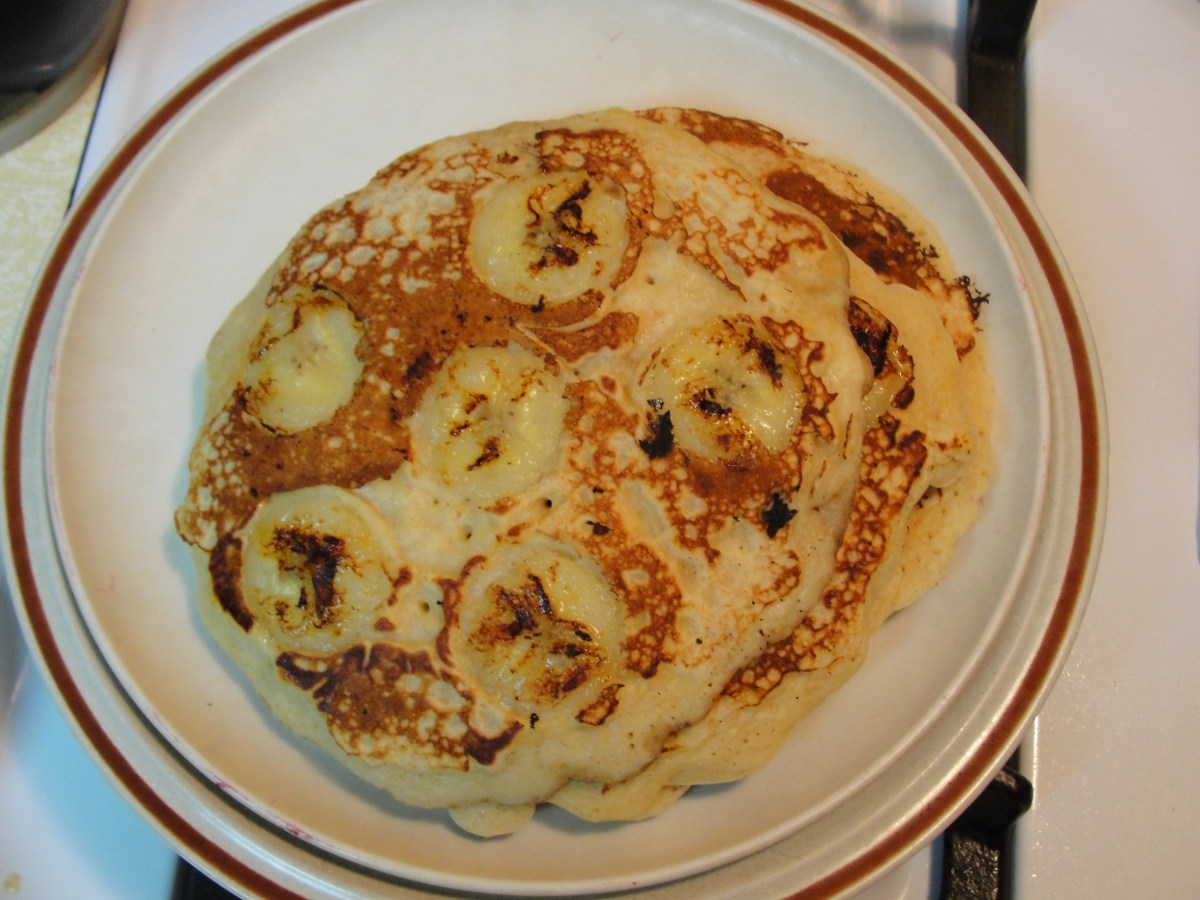
Adjusted for inflation, however, bananas actually cost less now than they did when I was a kid. Fifteen cents in 1950 is the same as $1.50 today, so sixty cents a pound is a real bargain. Mom bought bananas only when they were on sale for ten or twelve cents a pound. Every once in a while she would use a couple of bananas to make banana pancakes. They were her regular thin pancakes with slices of bananas baked into them, but we thought that they were extra good.

I like to use some whole wheat flour in my recipe. The whole wheat gives the pancakes a slightly nutty flavor that I think makes them taste even better. And just think, you can buy the bananas for less than half the price Mom paid!

INGREDIENTS:

1 1/4 cups all-purpose flour
3/4 cup whole wheat flour
1 tsp. salt
1 T baking powder
2 T sugar
2 large eggs
2 cups milk (approximately)
2 T vegetable oil plus more for frying the cakes
2 medium bananas

PROCEDURE:

Use a fork to mix the flours, salt, baking powder and sugar together in a bowl. Stir in the milk, eggs and oil and mix until you have a batter. Don’t worry about a few small lumps. If the batter is too thick to pour, add a little more milk. If it is too thin, add a little more flour.

Heat a skillet or griddle over moderate heat. Spread a half teaspoon of oil on the surface of the pan. When a drop of water sizzles as it hits the surface, the pan is ready.

Pour or ladle a fourth or third of a cup of batter onto the pan and spread it to a five to eight-inch circle.Banana Pancake cooking Cut four to six thin rounds of banana on top of the batter. Cook each cake until bubbles start forming in the center and the edges are dry. Turn and brown it for a minute or two on the other side.
Continue with the rest of the batter, greasing the pan very lightly after each cake is done if necessary, until you have enough pancakes for everyone. Leftover cakes can be warmed next day in the microwave.

Serve with maple syrup, butter and bacon or sausage for a real Wisconsin breakfast.

NOTES: You can make oatmeal banana pancakes the same way, and they are delicious. I discovered this at the cabin when we didn’t have any whole wheat flour. We now enjoy them for breakfast occasionally at home as well. Just use the recipe for Easy Oatmeal Pancakes and slice the bananas on the cakes.
Spaghetti of the Night

My mother would never have made Spaghetti of the Night (Spaghetti alla Puttanesca) if she had known any Italian. She and my father once did give a young woman who had quit her job as a stripper at the Phipps Tavern a ride into Hayward so she could catch the bus back to St. Paul. Mom told me that the woman seemed like a nice girl. Women who took their clothes off to make money were one thing, prostitutes something entirely different, and translated into English, Spaghetti alla Puttanesca is “spaghetti in the style of prostitutes.”

There are stories that the dish was invented by “women of the night” in Naples who made the fragrant pasta sauce to attract customers. That’s possible, since it is a simple and inexpensive recipe. You could say that Spaghetti alla Puttanesca is like the free peanuts some taverns offer customers to boost the bar trade.

However, I think that the newspaper story attributing the recipe to Sandro Petti, co-owner of a restaurant on the island of Ischia, near Naples, is more credible. As the story goes, late one night in the 1950’s a group of hungry customers demanded that he make them something to eat after the kitchen larder was nearly bare. He took some tomatoes, olives and capers and made a simple sauce that he poured over spaghetti.

His customers that night liked it, so Sandro made it again and finally listed it on the menu as “Spaghetti alla Puttanesca.” It’s a good name that customers will remember. The one indisputable fact is that “Spaghetti of the Night” (to use the prudish name) is now a popular dish in southern Italy. There are many variations. This version is adapted from Betty Crocker Italian Cooking and is a delicious light variation on a tomato sauce for spaghetti.

One thing I will guarantee. You will not taste the anchovies in the sauce. Period. The anchovies add a complexity of flavor that you will love, but they do not lend a “fishy” taste to the sauce. They do add a little salt, so be careful to taste before you add very much Parmesan.

INGREDIENTS:

1 large can (28 oz.) of Italian-style Plum tomatoes
1 large can (28 oz.) of diced tomatoes
1 red jalapeño pepper
1/3 cup olive oil
2 large cloves garlic
1 T capers
4 flat anchovy fillets in oil
1/2 cup sliced Kalamata or other large ripe olives
1 lb. package spaghetti
Parmesan cheese to pass at the table

PROCEDURE:

Chop the plum tomatoes into half to three-quarter-inch pieces and set them aside in a bowl with their juice. Add the diced tomatoes. Wash, remove the stem end and slice the jalapeño into quarters. Remove the seeds and white membrane. Slice each quarter in half and chop the slices into an eighth-inch dice. Chop the anchovy fillets into half inch pieces. Add the diced peppers and anchovies to the tomatoes.

Heat the oil in a three or four quart saucepan over moderate heat. Remove the paper from the garlic cloves, slice them in halves and cook them in the oil until they are golden brown. Be careful not to overcook the garlic, as it will leave a bitter taste in the oil if you do. Remove and discard the garlic.

Stir the tomatoes, capers, pepper and anchovies into the oil. When the mixture comes to a boil, reduce the heat and simmer the uncovered tomato mixture for about half an hour. Stir frequently to prevent sticking as the sauce gradually thickens.

When the sauce has begun to thicken start a pot of water heating to cook the spaghetti and slice the olives into thin rings. I usually try for three or four rings per olive.

Cook the spaghetti according to the directions on the package. The spaghetti should be cooked just barely to the al dente stage as it will continue cooking when you combine it with the sauce. Remove the sauce from the heat and stir in the olives.

Drain the spaghetti and put it back into the pot. Pour the sauce over the spaghetti and return the pot to the cooktop. Stir in the olives. Cook the spaghetti over moderate heat for two or three minutes, stirring constantly, until the spaghetti is coated with the sauce.

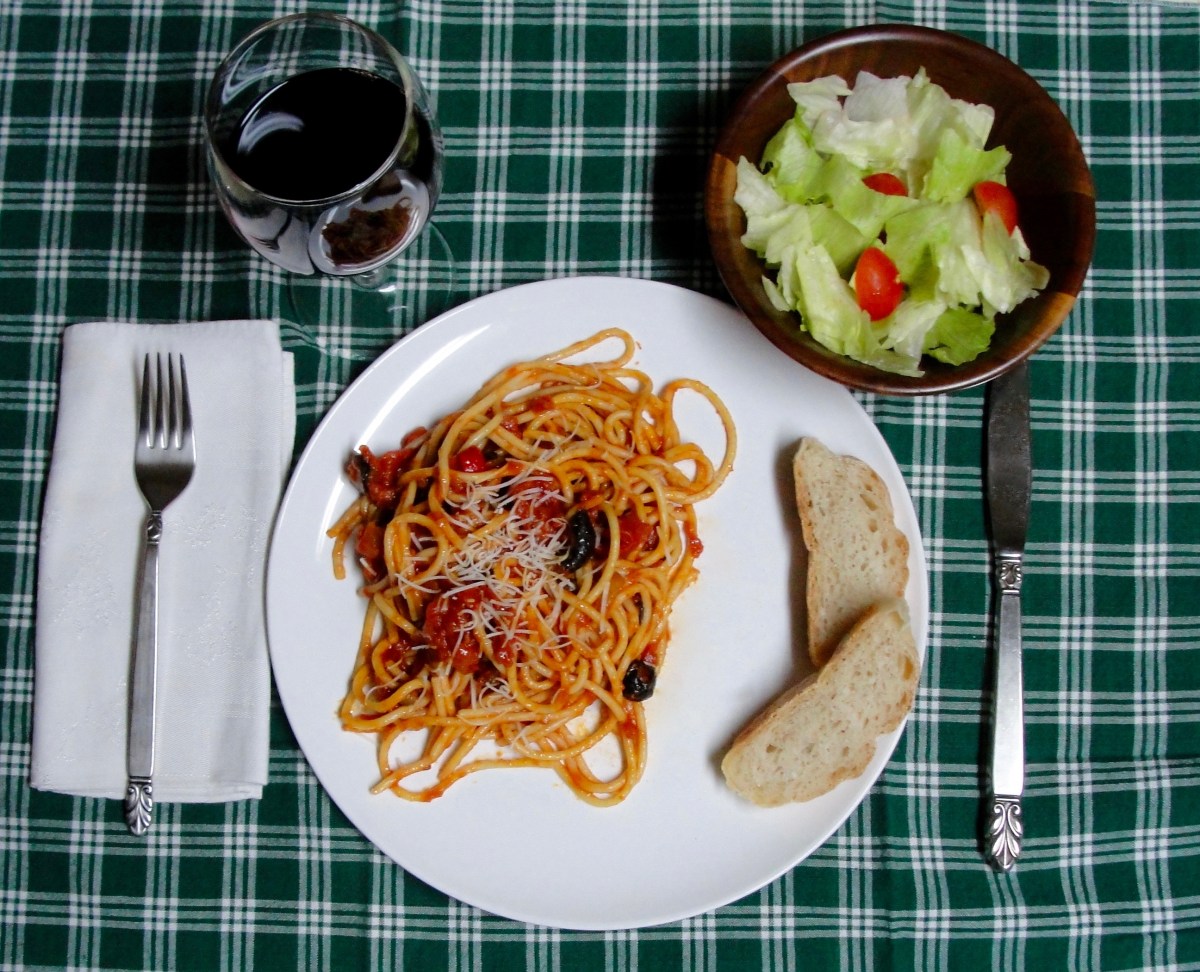
Serve with a green salad, bread and a dry red wine. Pass the Parmesan.

NOTES: Unless someone had served it to her, I doubt that my mother would have ever considered making this recipe, even it it was called spaghetti of the night. Like many people, she was prejudiced against anchovies.

She made her spaghetti sauce with chopped tomatoes and some diced onion simmered with salt, pepper and a little basil. She always added browned hamburger. There were no vegetarian dinners in the Rang household.

After I left the nest, Italian cuisine became more popular in the Hayward area so Mom may have experimented with Italian recipes from the Superior Evening Telegram or Woman’s Day. One thing I’m sure of is that she would have rejected any recipe that included anchovies. She wouldn’t have allowed any of those “fishy things” in her kitchen.

Our daughter-in-law introduced me to this recipe. She said that she didn’t have any red jalapeños, so she used a green one. Either kind works just fine. The last time I made this recipe, I added some finely chopped Italian sweet red pepper that I had picked up on impulse at a farmers market. The Spaghetti of the Night was still a hit.