
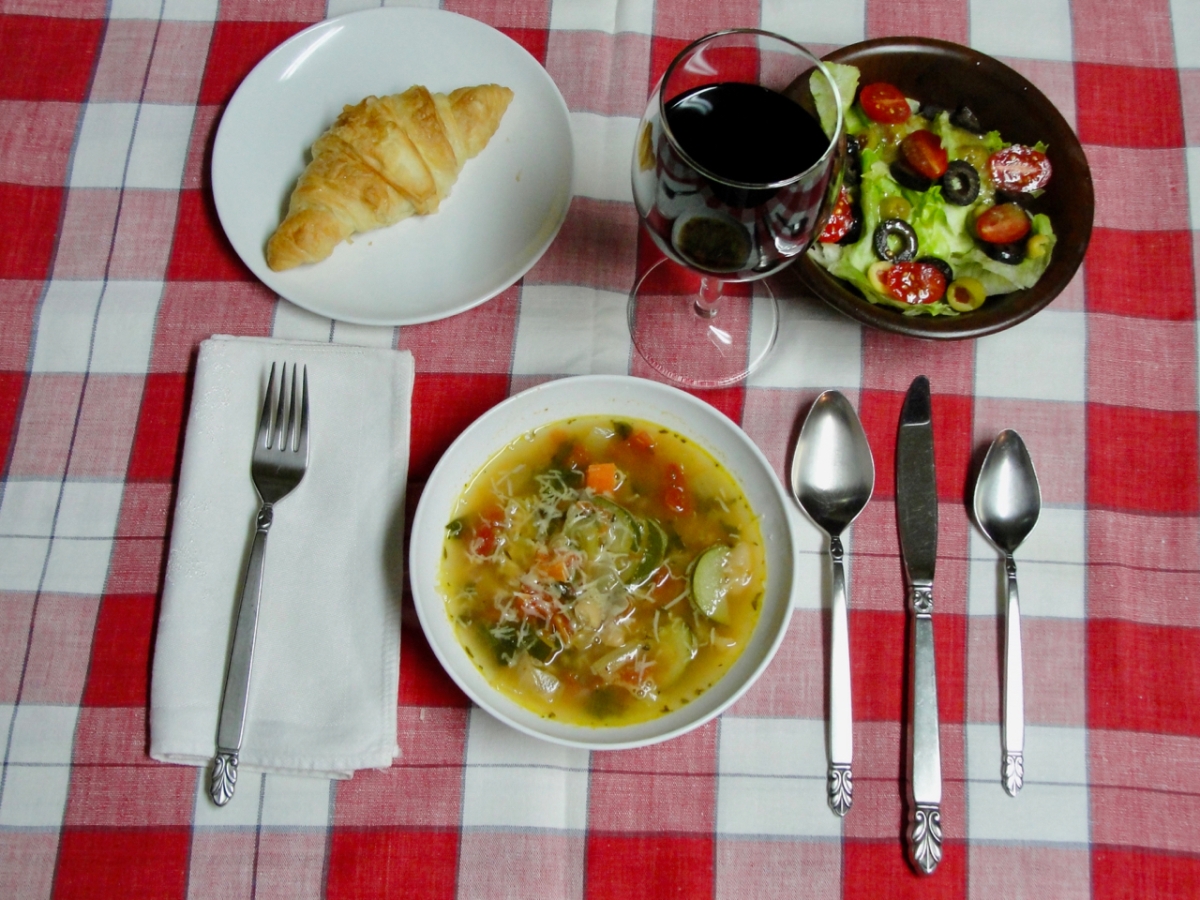
Like most people Jerri and I enjoy a good soup, so I make quite a few of them. Recently, while I was chopping vegetables for the pot I began thinking about the word “soup.” Our word comes most directly into English from the French word “soupe,” which comes from the Latin word “suppa,” but the word is ultimately from Indo-European, which explains why the Germans, Norwegians and Danes make “Suppe,” the Swedes, “soppa,” while the Spanish and Portuguese make “sopa.” All these words can be traced back to the same ancient root.
For nearly as long as I can remember I have been fascinated by language. When I was a freshman in high school I joined the forensics club and eventually decided to compete in the original oratory category. Most students who chose this category wrote speeches about current events or problems. I decided to compose an oration about the English language.
With the help of Mrs. Wyant, my forensics coach, I did move on from the district level, but I didn’t win at the University of Wisconsin which hosted the state forensics competition. The most valuable comment I received from the judge was his observation that my hands turned purple. I remember that he suggested, “You might try moving them around.” I learned to relax and gesture occasionally while speaking.
Making soup is another way to keep your hands from turning purple, since soups almost always require chopping vegetables or meat. Most soups need to be stirred as well, which also keeps your hands moving.
You have to do a little chopping for this soup but it is quick and easy to make. You’ll be done in less than an hour, and the result is both nutritious and delicious.
IINGREDIENTS:
1 cup chopped onion
1/2 – 3/4 cup diced carrots
1/2 – 3/4 cup diced celery
1 1/2 – 2 cups chopped zucchini
1 T olive oil
1 quart chicken broth
2 large cloves garlic
1 tsp. thyme
1 tsp. sage
1/2 tsp. salt
Generous grind of fresh black pepper
1 tsp. water
2 – 3 Roma tomatoes
1 can cannellini beans (about two cups)
2 – 3 cups kale
Freshly grated Parmesan cheese
PROCEDURE:
Clean and chop the onion into a quarter-inch dice and the carrots and celery into a half-inch dice. Remove the paper from the garlic and mince it. Wash and remove the stem and blossom scar from the zucchini, divide it into quarters lengthwise, then chop it into quarter inch slices.
Put a tablespoon of olive oil into a three quart saucepan over moderate heat and add the vegetables, thyme, sage, salt and pepper. Stir for about two minutes to coat the vegetables with oil , then add a teaspoon of water, reduce the heat and cover the pan to steam the vegetables for six or seven minutes until they are tender.
Add the chicken broth and increase the heat. While the broth and vegetables are coming to a boil, wash and remove the stem scars from the tomatoes and chop them into a quarter-inch dice. Drain the beans, put half of them into a small bowl and mash them. Wash the kale and discard the large central ribs from the leaves. Roll three or four leaves at a time into bundles and cut the rolls into three-quarter-inch wide strips. Set the kale aside to add later.
Stir the tomatoes and beans into the cooked vegetables and bring the soup back to a boil. Cook for about two minutes. Stir the kale into the soup and cook for another two minutes. Taste and adjust the seasoning.
Serve with bread and offer grated Parmesan cheese as a garnish.
NOTES: There are several varieties of kale. Use any of them, including the decorative plants you might be able to steal from your spouse’s ornamental garden. You can also substitute baby spinach for the kale.

 Courage in the Kitchen