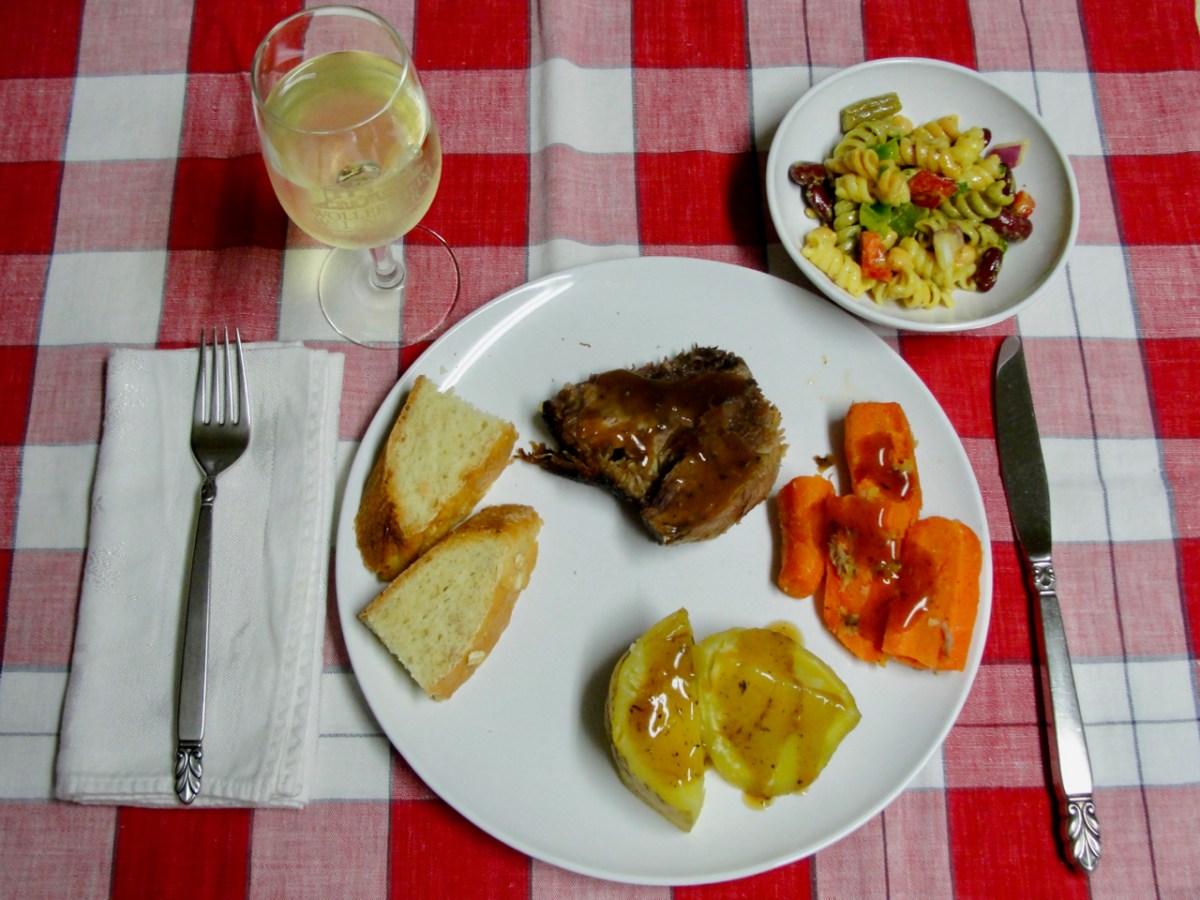
Mediterranean Pork Pot Roast

I like pot roasts for a number of reasons. First, everything cooks in one pot, so cleanup is easier. Second, cooking a roast on top of the range doesn’t heat up the house as much as roasting it in the oven, which is very important in the summer if you live in a house without central air conditioning. Third, braising the meat with liquid over gentle heat will guarantee a moist and tender roast. Fourth, the liquid you choose can add more complexity to the flavor than even the best rub. Fifth, I love the aroma of a pot roast simmering on the stove. And sixth, it reminds me of the many pot roasts my mother fed us when I was growing up.

Maybe I should reverse the order of the reasons, but I have friends whose mother’s never welcomed their sons or daughters home from school into a kitchen perfumed by a good pot roast cooking for supper. Some of them never even had freshly baked cookies or bread warm from the oven with butter and homemade jams and jellies. I was lucky in that way.

My mother made pot roasts with beef, pork, venison and even once with meat from a bear we had bagged, which was one of her few disasters. Here is a reference describing some problems we had in trying to cook bear meat. I don’t think that my mother ever wrote down recipes for different kinds of pot roasts, and by the time I was born, she had already been cooking them so long that I doubt she ever looked in a cookbook for a pot roast recipe. She did occasionally try one from Woman’s Day or another magazine or newspaper, but usually she trusted her instincts, which were pretty good.

I doubt that she ever consciously used the combination of spices known as Herbes de Provence in anything, but her spice cabinet had most of the herbs used in this famous blend. The herbs vary somewhat from blend to blend, but they all are from plants that grow well in the mild Mediterranean climate of the region.

The herbs, wine and vegetables work together to make this a delicious one-dish meal.

INGREDIENTS:

1 tsp. olive oil
3 – 4 lb. pork shoulder roast
1 medium onion
3 cloves garlic
1/2 cup water
1/2 cup dry white wine
1 chicken bouillon cube
1 bay leaf
1/2 tsp. salt
1/2 tsp. rosemary
1/4 tsp. thyme
1/4 tsp. oregano
1/4 tsp. marjoram
1/4 tsp. summer savory
1/8 tsp. freshly ground black pepper
3 – 4 potatoes
4 – 5 carrots
Extra dash of salt
2 T corn starch dissolved in a quarter cup of cold water
1/4 – 1/2 tsp. brown gravy sauce (optional)

PROCEDURE:

Clean and chop the onion into a quarter-inch dice and set it aside in a small bowl. Remove the paper and stem ends from the garlic cloves and mince them. Add the garlic to the onion. Trim any excess fat from the meat.

Put a large skillet or Dutch oven over moderate heat and film the bottom with a little olive oil. Brown the meat on all sides. Put the water, wine and bouillon cube into the pan. Arrange the onion, garlic and bay leaf on and around the meat, then sprinkle the salt and spices evenly over the meat and vegetables.

Cover the pan and bring it to a simmer. Cook the roast for one and a half hours. Check every twenty minutes or so to make sure that the roast is still surrounded by liquid. If necessary, add equal amounts of water and wine.

Clean the potatoes and carrots while the roast is cooking. I chop the carrots into two-inch pieces and slice the larger carrots in half lengthwise. Chop the potatoes into halves or quarters, depending on the size.

Arrange the potatoes and carrots around the meat and sprinkle the vegetables with a little salt. Cover and cook for half an hour, then check the vegetables for doneness with a fork. Feel free to cook them a little longer if they still feel hard when you pierce them.

Remove the meat, potatoes and carrots from the pan and take the pan from the heat while you dissolve the corn starch in cold water. If necessary, add enough water and wine to make two cups of liquid. Stir the corn starch mixture into the roasting liquid and return the pan to the heat to make the gravy. Stir constantly until the gravy is clear and thickened. Add a few drops of brown gravy sauce if you want more color.

Taste and adjust the seasoning.
Rustic Oatmeal Bread

I first made this bread while we were on vacation. I don’t remember where we were vacationing, though I am sure that it was at a resort where the fishing was good. As I review my many failings as a husband and father, I especially regret not taking our family on more vacations far away from places where the primary resource was water harboring trophy fish for fathers and plenty of ravenous panfish for mothers and children.

I lay the blame squarely at the feet of my parents, who both liked to fish. There are over one hundred named lakes within a thirty-mile circle of Hayward, Wisconsin, and we fished at least a quarter of them while I was growing up. We couldn’t afford vacations, but we could afford a day trip to a lake that Dad or Mom wanted to see and fish.

While Mom packed a picnic lunch, my sisters and I helped Dad dig angleworms and load the car with bait, rods, tackle boxes, paddles, swim suits, towels and 6-12 Mosquito Repellent plus a blanket or two to sit on. Finally, Dad lifted the canoe on top of the car and tied it down with our cane poles fastened beside the canoe. Soon we were off to a familiar lake or on our way to explore a new one.

Those were glorious adventures that I think help explain how we ended up at a primitive cabin that didn’t even have any bread pans on a cold rainy day when even I didn’t want to sit in a boat catching more walleyes. We already had some nice fillets in the refrigerator.

“Fresh bread,” I said, “would go good with the walleye.”

“And baking bread would help warm up the cabin,” observed my wife.

The kids applauded the idea of being able to take off their coats on what was supposed to be a summer vacation.

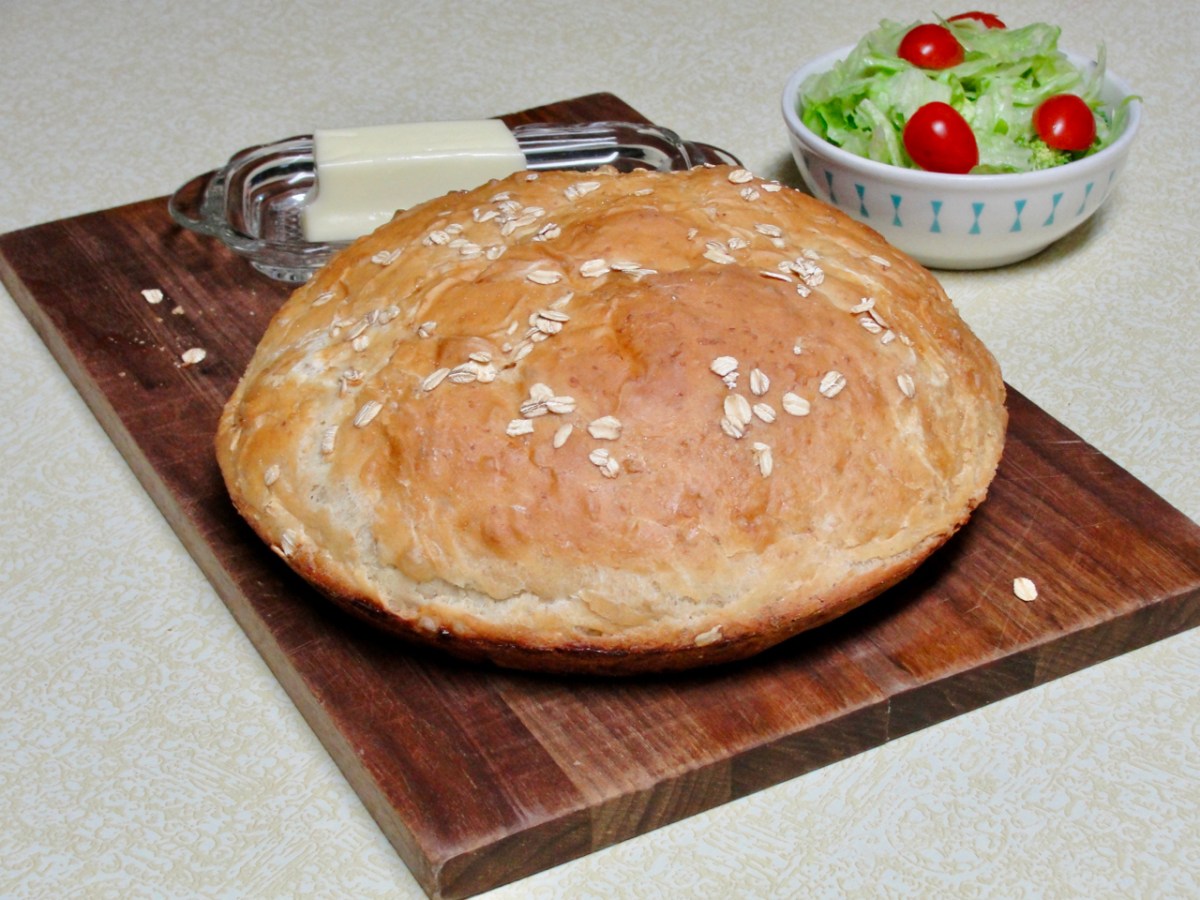
And so I baked some bread from memories of helping my mother. We had brought the ingredients with us, not because we planned on baking bread, but because we liked to cook good meals. Luckily I had tossed in a package of yeast with the idea of making some yeast-raised pancakes. Since we had no bread pans, I made free-form loaves. The egg wash gave them a nice finish.

This is a moist and hearty bread that keeps well.

INGREDIENTS

3 cups water, divided
2 teaspoons yeast
1 cup old-fashioned oatmeal
3 teaspoons salt
1/4 cup sugar
4 tablespoons butter
1/2 cup milk
About 7 cups unbleached all purpose flour
1 egg

PROCEDURE

Stir a quarter teaspoon of sugar and two teaspoons of yeast into half cup of warm (105º) water and allow the yeast to proof. When bubbles begin to form on the surface of the water, you know that your yeast is alive and well. You have proofed or tested it.

Put two and a half cups of water into a saucepan, add a dash of salt and bring the water to a boil. Stir in the oatmeal and cook for five minutes. Remove the pan from the heat and empty the pan into a large mixing bowl. Add three teaspoons of salt, a quarter cup of sugar, four tablespoons of butter and a half cup of milk. Add three cups of flour, one at a time and stir them in well. Let this mixture cool until it feels warm but not hot. Stir in the yeast and allow this thin sponge to sit until you see bubbles rising to the surface.

Add about three cups of flour one cup at a time, mixing well after each addition until you have a moist but thick dough. Flour a breadboard or countertop with a half cup of flour and scrape the dough out of the bowl. The dough will be sticky to work with, so use a baker’s scraper or spatula to turn the dough and begin working flour into it. Knead the dough until it is elastic and no longer sticky, adding flour as necessary.

Grease the bread bowl and turn the dough to cover the surface when you put it into the bowl. Cover the bowl with a damp cloth and let it rise until doubled in bulk. Grease a large baking sheet.

Remove the dough from the bowl, knead it for thirty seconds or so and divide it into three parts. Make three balls and place them on the baking sheet. Cover them with the damp cloth and allow them to rise until the dough is again doubled in bulk.

Preheat the oven to 350º while the loaves are rising.

Separate the egg and beat the white with a teaspoon of cold water. Brush the tops of the loaves and sprinkle some oatmeal on top.

Bake about forty minutes in a 350º oven. The bread is done when an instant read thermometer inserted near the center of a loaf reads 190º. Or do what my mother always did: Tap on the bottom of a loaf. If it sounds hollow, the bread is done.

NOTES: You can use butter, lard or shortening to grease the bowl and baking sheet. You can also bake the balls in greased pie plates.