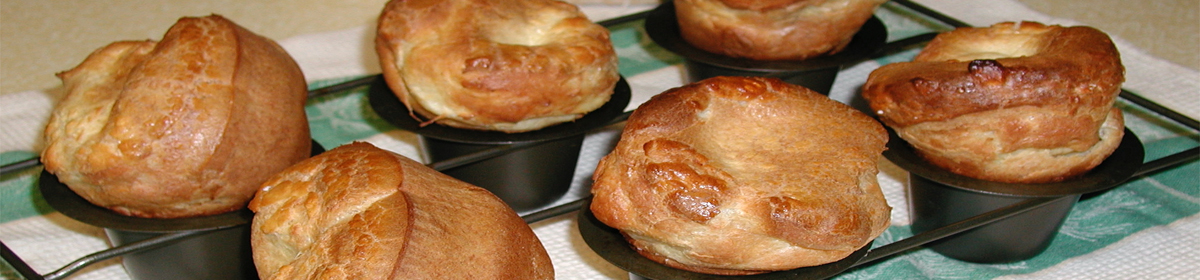
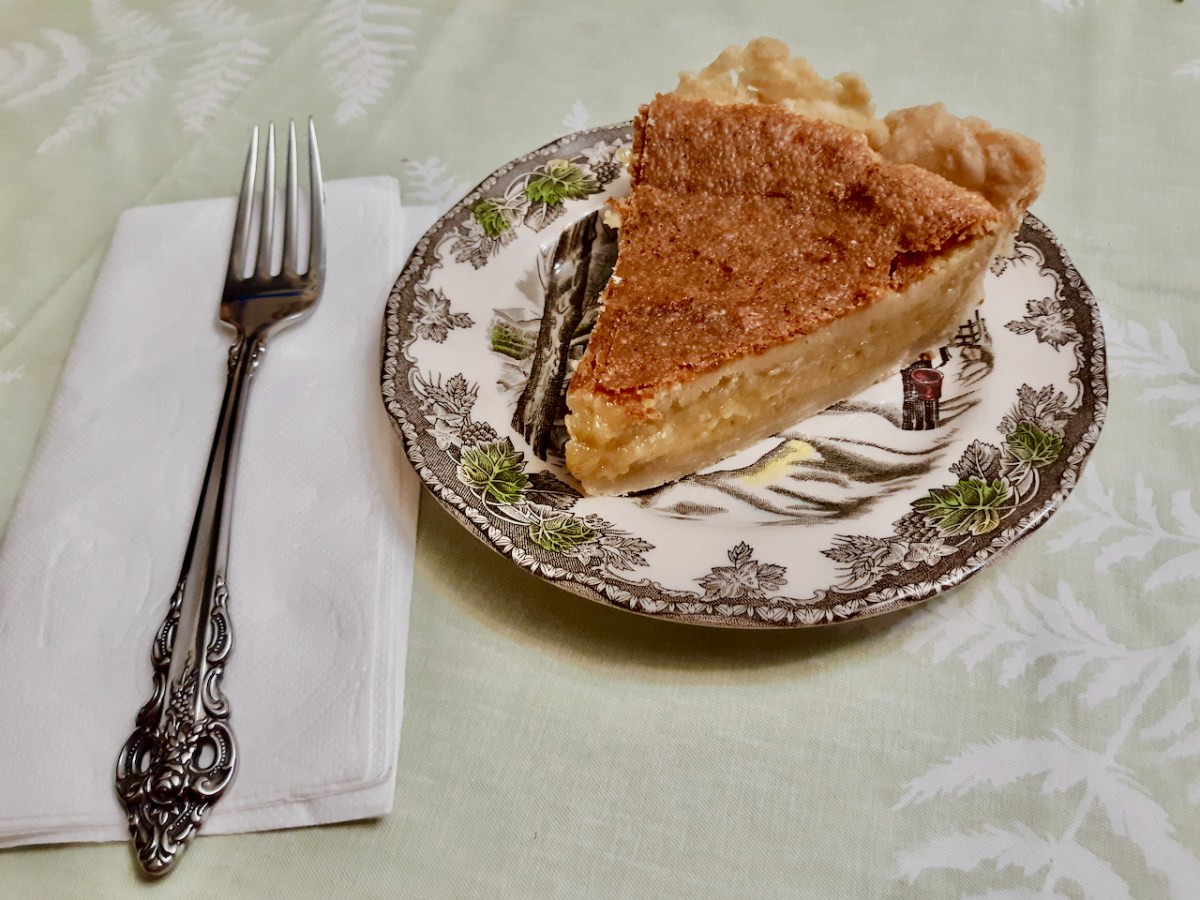
Like Roaring River Chess Pie

Nearly fifty years ago I tasted my first piece of Chess Pie.  It was really special.  Jerri and I were on our honeymoon for a week at Roaring River State Park in southwest Missouri.   The Ozark mountains offer some beautiful vistas, and the cold clear water of the Roaring River reminds me of the streams where I first learned to fish for trout.  It was a beautiful place for our first days together.

Like many of the parks throughout the United States, Roaring River State Park was built by young men enrolled in the Civilian Conservation Corps.  The CCC was the most popular of the New Deal programs.  In addition to their work at state and national parks, CCC men planted the bare lands of northern Wisconsin and Minnesota with pines that grew into the forests we enjoy today and constructed scenic highways like the Blue Ridge Parkway in Virginia.

The log cabin we rented was built by men who were probably younger that I was, but they were led by experienced foremen, so it was snug and private, perfect for the two of us.  There was a restaurant in a larger log building where we ate most of our meals.  It was rustic and spotless and staffed by cheerful waitresses.  Obviously there were some talented people in the kitchen.  Believe me, I would remember any bad meals.

We did take a couple of day trips to nearby places.  The park is about fifty miles from Branson, Missouri and Table Rock Lake where friends of Jerri’s parents, Paul and Shirley, had a campsite where they spent much of the summer.  They took us water skiing on the lake and we had lunch in Branson, at that time a small town catering to tourists that reminded me of Hayward, where I grew up.

Nine years later we spent a night at Roaring River State Park with our children.  The restaurant was gone from the log building which now housed a gift shop filled with souvenirs.  The only room we could get was in a new brick building which also housed the restaurant.  When I tried to order Chess Pie, the young waitress did not know what it was.

That summer I had been reading William Butler Yeats in preparation for teaching a Sophomore Literature Survey course.  The transformation of the park made me think of the opening lines from “September 1913”:

“What need you, being come to sense, 

But fumble in a greasy till 

And add the halfpence to the pence 

And prayer to shivering prayer, until 

You have dried the marrow from the bone…. “

We did not visit Branson on our way back to Kentucky.  My mother enjoyed her visit there many years later and my oldest sister thinks that Branson is wonderful.  There are now fifty theaters and lots of neon signs, so visitors are not distracted by trees and night skies.

Since that magic week in August of 1967, I have been sampling Chess Pie from time to time.  It is not as popular as it once was, but I occasionally find it in local restaurants from southern Illinois to the Gulf Coast.  Most versions have been good and all have been edible, but none match my memory of Roaring River Chess Pie.  I am still looking for a recipe that will produce the same delightful flavor I remember.

This one comes very close.  Maybe the only thing missing is a dash of honeymoon happiness.

INGREDIENTS:

9 “ pie shell

1 cup granulated sugar

3/4 cup light brown sugar

1 T cornmeal

5 large eggs

1/3 cup whipping cream

1/2 cup butter

1 T cider vinegar

1 tsp. vanilla extract

DIRECTIONS:

Line a nine-inch pie plate with a crust.  You can buy crusts in your local market, but once you have made a few, you will find that homemade pie crusts are inexpensive and easy to make.

Bring the eggs to room temperature or put them in warm water for a few minutes.

 Preheat the oven to 400º and melt the butter. 

Blend the granulated sugar, brown sugar and cornmeal in a mixing bowl.  Beat in the eggs one a time.  Add the whipping cream, butter, vinegar and vanilla extract.   Beat everything into a smooth batter.

Pour the filling into the pie shell and bake on the center rack for ten minutes.  Reduce the heat to 325º and bake for about forty-five minutes more.  The pie will be done when a table knife inserted near the center of the pie comes out clean.  If necessary, bake another three minutes and test again.

Note: The photo is courtesy of my brother-in-law Patrick and my sister Patsy, who baked the pie.
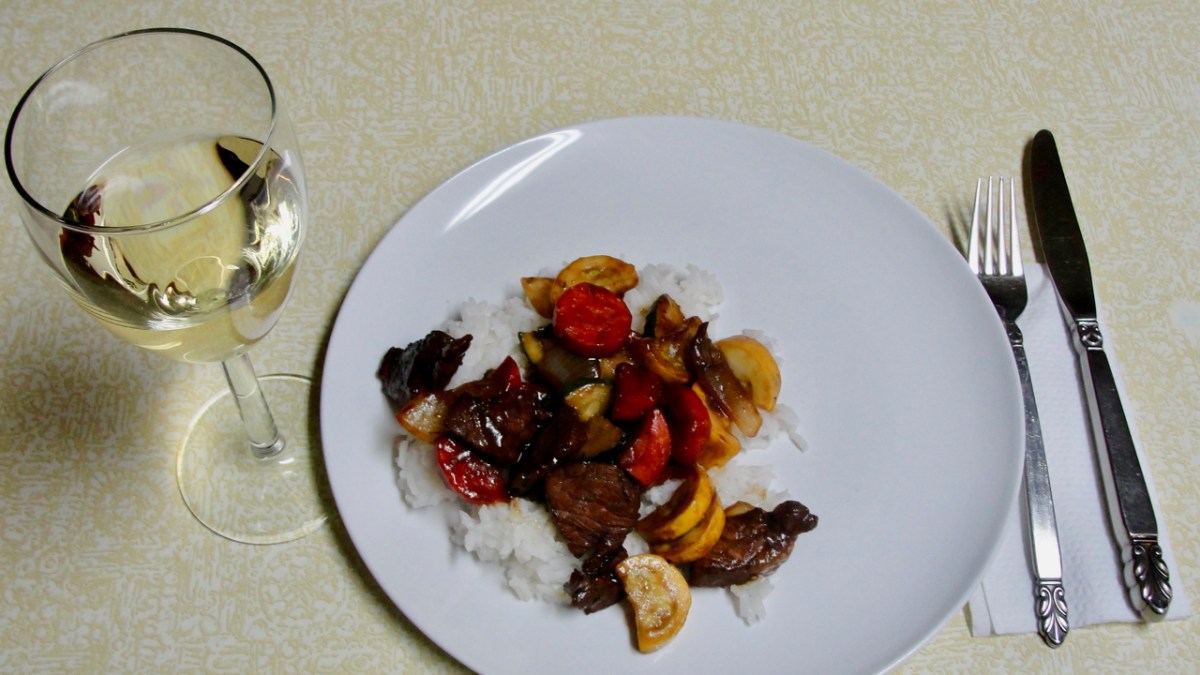
Pork and Squash Sauté

When I was growing up, there were no Community Supported Agriculture farmers or CSA’s. The first CSA’s appeared in the 1990’s. A majority of Americans still had a close connection to farmers, ranchers or gardeners. When children went to school they learned about the farmers who built our country. On the playgrounds, kids exchanged stories about grandparents, uncles and aunts who raised cows and pigs or chickens or planted huge fields of everything from alfalfa to sweet corn and carrots.

More than a third of the people in the United States in 1950 lived in rural areas. Today fewer than a fifth do. Much of the food we buy today comes from places we will probably never visit, let alone have some personal connection to the people of that area.

There are advantages to our international food supply system. Foods that were once seasonal are now available year round and other foods that were not available at all are now displayed on store shelves much of the year. People in Arizona can buy cranberries in November to go with their Thanksgiving turkey and those of us in the north country can enjoy fresh strawberries in January when our local strawberry fields are knee deep in snow.

There are disadvantages to our modern food chains as well. First, people are beginning to forget the connection between the foods they eat and the people who produce them. Second, the foods in the supermarket which often are shipped thousands of miles from the farms where they were produced can never be as fresh as those grown within a half hour’s drive of the store.

Community Supported Agriculture is a system designed to eliminate both of these disadvantages. When I was a kid, we enjoyed fresh foods grown by people we knew, which is what CSA’s make possible for people living in apartments or on city lots where it is not practicable to turn the lawn into a garden of peas, beans, beets, sweet corn or squash.

Squash. I love that gift from the Native Americans who domesticated squash plants thousands of years ago. It grows well as far north as Wisconsin and Minnesota and many squash varieties are prolific. In the first garden we had in Kentucky I planted five hills of zucchini. I learned my lesson. One can not even give away zucchini in Kentucky, except to very good friends who are too polite to say no. CSA farmers also love squash because it helps fill the boxes quickly.

Our son and daughter-in-law buy a share in a CSA at Stillwater, Minnesota, and the boxes include lots of squash. Irma does a good job with the vegetables in the box every week, but two adults and one two-year-old son can eat only so much. In a few years as the boy grows, they may have to buy an extra share to keep up with a growing appetite, but right now, Irma depends on us to help out when she has to empty last week’s box to exchange for a new box of veggies from the farmer. Thus, we get nice fresh vegetables from a local farm for free.

In return, I have been trying to answer Irma’s question of “What can I do with all this zucchini and yellow squash?” with some new recipes. Here is one I created recently that we liked a lot. It’s like a stir-fry, but I call it a sauté because I steam the onions and carrots to tenderize them and meld the flavors with the meat sauce before adding the squash to cook for just a few minutes before serving.

INGREDIENTS:

2 small boneless pork chops (2/3 – 3/4 lb.)
2 T vegetable oil, divided
1 T cider vinegar
1 T soy sauce
1/2 tsp. teriyaki sauce
1/8 tsp. garlic powder
1/4 tsp. powdered ginger
1 cup chopped yellow squash
1 cup chopped zucchini squash
1 cup chopped onion
1 cup chopped carrot
1 T water
1 tsp. chicken bouillon
1 tsp. corn starch
3 T water
Extra teriyaki sauce for seasoning

For the rice:

3/4 cup rice
1 1/2 cups water
1/2 tsp. salt

PROCEDURE:

Slice the pork into thin strips about an eighth of an inch thick by about one and one half-inches long. Put the meat into a small bowl. Add one tablespoon of vegetable oil, the vinegar, soy sauce, teriyaki sauce, garlic powder and ginger. Stir to make sure all pieces of meat are covered and allow the meat to marinate for a half hour or forty-five minutes while you prepare the vegetables or relax with a glass of wine.

Wash the squashes, remove the stem and blossom ends and and chop them into quarter-inch slices. Put them in a small bowl. Clean the onion and chop it into a half-inch dice and put it into another small bowl. Peel or scrape the carrot, cut it into quarter-inch rounds or half rounds and put them into a small bowl.

You can start cooking after the meat has marinated at least half an hour.

Rinse the rice and put it into a one quart saucepan. Add the water and salt and set the pan over high heat. When the pan has come to a boil, reduce the heat to a low simmer and cook the rice about twenty minutes or until all the water is absorbed. Fluff after the rice has absorbed the water.

After the rice has cooked for five or six minutes, put a tablespoon of oil into a large skillet over moderate heat. Add the meat with the marinade and sauté for five to six minutes, then add the onions and carrots. Add a tablespoon of water and cook for four or five minutes until the carrot starts to soften, stirring occasionally.

Add the squash and cook for about four minutes, stirring occasionally.

Dissolve the bouillon and corn starch in the water and stir it into the pan. Keep stirring until the sauce is clear, then add a teaspoon of teriyaki sauce.

Stir and serve over the rice. Offer soy sauce at the table. This recipe makes four servings.

NOTES: I have not tried it, but I think you could slice the meat and put it into the marinade in the morning before leaving for work and finish your dinner while the rice is cooking. Of course, you would not have time for the glass of wine if you did this.