In November our cabin turns into a hunting shack with blaze orange coats, hats and pants hung in the hallway or piled on cots in the main room. If I close my eyes, the fragrance of gun oil and Hoppe’s #9 combines with the smell of boots and wool socks drying next to the stove to take me back to the hunting shacks I remember as a boy.
Back then the men didn’t shave or shower in camp but they usually washed their hands in a washbasin before devouring huge sandwiches and vast amounts of soup or chili washed down with plenty of beer that was kept outside the door next to their rifles. When it was really cold the beer was brought inside to keep it from freezing and breaking the bottles. The rifles stayed outside.
Hunting shacks attracted mediocre card players and great story tellers. They were like repertory theaters where dramatic presentations were repeated annually, and some particularly popular acts were shared multiple times in one nine-day season, depending on the amount of beer, brandy and bourbon consumed by the gang. Even the card players sometimes stopped to listen.
Antlers became larger, the deer more elusive and the hunters more crafty, until some grizzled old man with white fuzz sprouting on his cheeks would put a halt to the chatter with a story about a gigantic buck that ran a mile shot through the heart and tumbled down a hill so steep that it took four men to drag him back to the shack.
There was always a camp cook and one or two good stories about him. My favorite was the one about the cook who was left with a pile of dishes on opening morning. He had the stand nearest the cabin so he could clean up, put the stew on and be in the woods shortly after daylight. Kept awake by snores the night before, however, he decided to crawl back into his bunk for a nap before tackling the kitchen chores.
It was broad daylight when he awoke. There was hot water on the barrel stove, so he stoked the cookstove, put on a new pot of coffee and the stew and began washing dishes. As he was getting ready to throw out the dishwater, a ten point buck walked into the clearing. “I backed away from the window real careful and loaded the 30-30,” he explained. “When I looked out the window, he was gone.” The suspense built.
“So I opened the door real quiet, and there he was, walking down the road, so I pulled down on him and dropped him with one shot.” By the time the gang got back for lunch, the buck was hanging from the deer pole, their cook was half sloshed and the stew was scorched a little. I think every hunting shack has echoed with a story like this.
We have a camp cook who doesn’t hunt. Chris does hike through the woods to drive deer to the rest of us and helps drag them out when necessary. He reminds us that he once spotted a buck for us.
While we were enjoying our midmorning snack of doughnuts and coffee at the table and Chris was sitting in the easy chair working on his Christmas letter, he suddenly remarked, “That’s a nice eight point buck for you guys.” Unfortunately our rifles were leaning against the cabin in full view of the deer who left rapidly when we opened the door. Wiser now, one of us leaves a rifle at the back door, but another buck has yet to appear.
Besides spotting that buck for us, Chris makes great chili and cornbread and has a wonderful recipe for cranberry raisin pie. Here is his introduction to that recipe.
“Speaking of pies, here is a recipe that I inherited from my sister-in-law. It has been a staple of their annual Thanksgiving pie breakfast. The breakfast had its origins in the family logging camp where annually they served as much pie as you could eat in honor of Thanksgiving. It is easy to make and delicious.”
INGREDIENTS:
2 T flour
2 cups sugar
1/4 tsp. salt
3 cups cranberries
1 cup raisins
2 T butter
1 egg
2/3 cup boiling water
Zest from one lemon
2 pie crusts
PROCEDURE:
First, make enough pie dough for a nine-inch double crust pie. You will find a simple pie crust recipe here.
Mix the flour, sugar and salt in a two to three quart saucepan. Wash and dry a lemon and scrape the outer layer off the rind with a zester or the smallest holes on a kitchen grater. Stir the cranberries, raisins and lemon zest into the dry ingredients.
To make the filling, stir in the boiling water and cook the cranberry mixture over low to medium heat, stirring a couple of times, until the cranberry skins start popping.
Preheat the oven to 400º.
Remove the filling from the heat, stir in the butter and allow the filling to cool about five minutes.
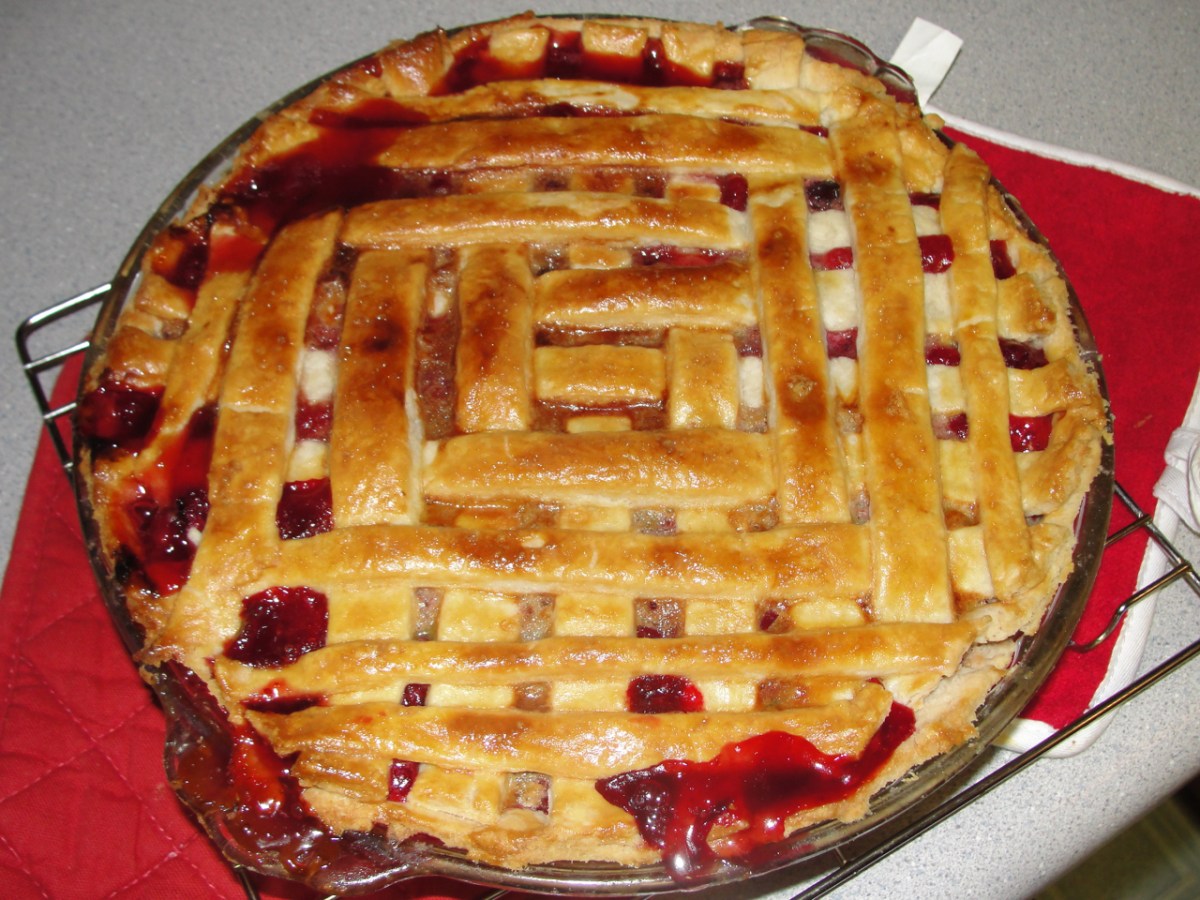
Roll out a bottom crust and line a nine-inch pie plate. Pour the filling into the crust. Roll out the rest of the dough, cut it in half inch strips and make a lattice by laying strips in alternate directions at ninety degrees to each other. Moisten the edge of the bottom crust before laying on the lattice strips to help glue the lattice to the bottom crust. Trim the crust and make a decorative edge with your fingers or a fork.
Beat the egg and a teaspoon of cold water in a small bowl or cup until it is lemon colored. Use a pastry brush to paint the lattice with the egg wash.
Bake the pie for 40 to 45 minutes until the crust is a golden brown and the filling is bubbling.
Cool the pie thoroughly on a wire rack. Once cool, the filling will jell and the pie will be ready to eat, but it tastes even better if you make it a day ahead of time.
NOTES: Chris included the following words of wisdom: “After cleaning the oven once, I also put a pan under the pie to catch drippings.” He also noted that he tried golden raisins once, but the result was “not so good.”
This is not a low carb pie, but it is wonderful. If you count carbs, eat a smaller piece.
 Courage in the Kitchen