There was a lull in customers at the meat counter, so the butcher and I chatted for a minute. Since he had some gray in his hair, I felt a certain kinship with him and risked asking whether his mother had made dishes with cream of mushroom soup poured over meat and various other ingredients. When he said she had, I asked him if he liked the results.
“What’s not to like?” was his response. His eyes glazed a little, like mine do when I think of green bean casserole. If you grew up in the 1950’s or 60’s, you almost certainly ate Campbell’s Cream of Mushroom Soup at least once a week.
Introduced by the Campbell Soup Company in 1934, cream of mushroom soup was featured in the company’s first full length cookbook, Easy Ways to Good Meals, in 1941. You may have thought that you were eating Tuna Noodle Casserole, African Chow Mein, Oregon Hot Dish, Chicken Crunch or Mixed Vegetable Hot Dish, but they all were made with Campbell’s Cream of Mushroom Soup or a store brand substitute.
That soup was ubiquitous and not just in a bowl in front of you. There was green bean casserole, of course, and on Sundays you might have had Pork Chops with Mushroom Gravy or dishes like Grandma Hopp’s Meatloaf. All have cream of mushroom soup as a major ingredient.
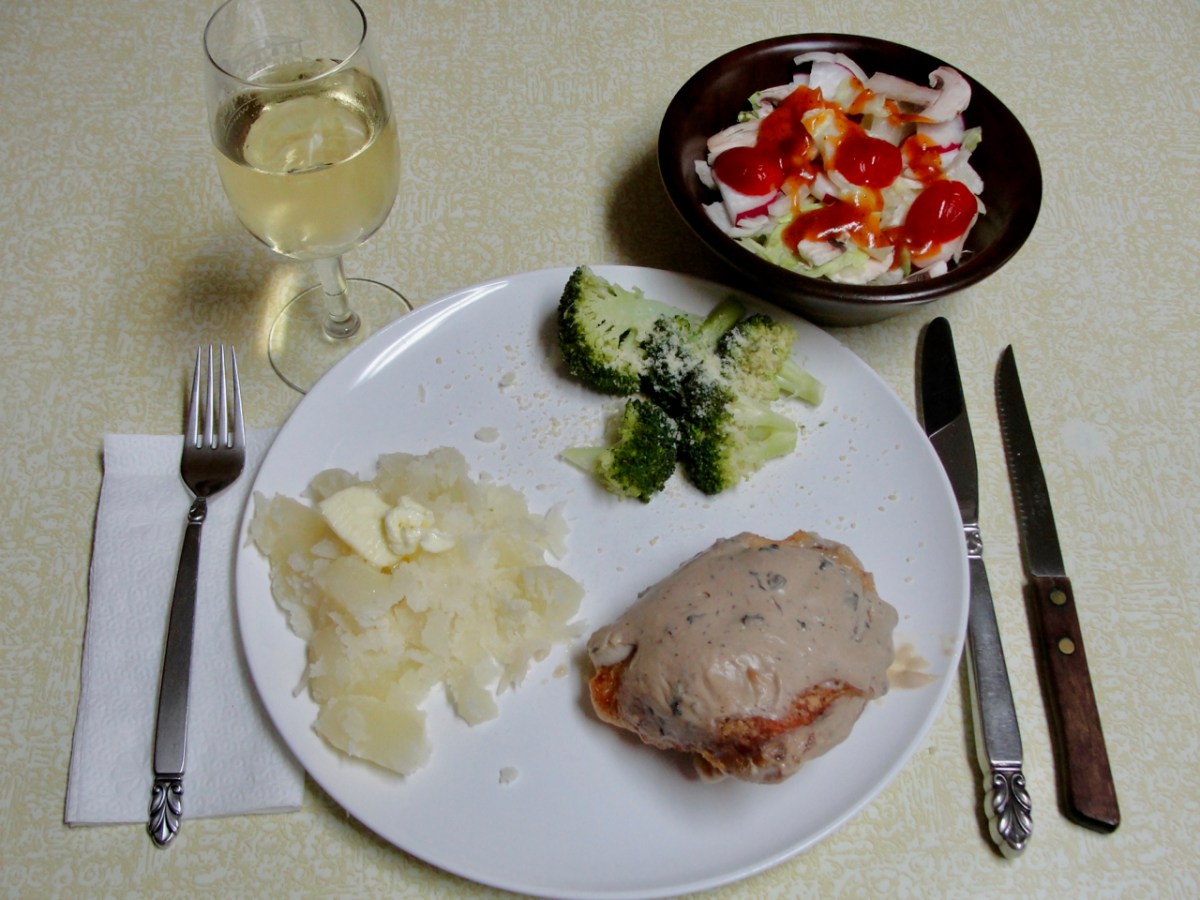
I have been smothering pork chops with cream of mushroom soup since I was old enough to use a can opener, but I had never tried that technique with chicken until I finally decided to make Aunt Dorothy’s Chicken Supreme. The recipe she sent me was designed for a larger gathering than we usually have at our home, so I reduced the quantities significantly.
Despite my foresight, Jerri packaged enough leftovers for lunch tomorrow and put three tender and tasty pieces of chicken in the freezer for dinner at a date to be announced. Aunt Dorothy’s recipes are made to feed a battalion. There is a reason.

When we received the invitation to her 90th birthday celebration, this photo on the back of the card showed the family members who showed up last year to observe her 89th birthday. There were more for her 90th. Word is, Aunt Dorothy has sixty-six direct descendants. We should all have so many people watching out for us.
You don’t need a big family to justify this recipe. Invite some friends for Sunday dinner or plan on having leftovers.
INGREDIENTS:
3 lbs. chicken pieces
1/3 cup flour
3/4 tsp. paprika
1/3 – 1/2 tsp. salt
1/8 tsp. black pepper
3 T butter
1/3 cup water
2 cans cream of mushroom soup
PROCEDURE:
Rinse the chicken under cold water and allow it to drain while you prepare the flour. Mix the flour with the paprika, salt and pepper in a paper bag. Preheat the oven to 400º and melt the butter in a small pan or microwavable dish.
Pat the chicken pieces dry with paper towels and dust them a few at a time in the bag. Put the pieces skin side down in a single layer in a nine by thirteen-inch baking dish or pan. Dribble the melted butter over the chicken.
Bake on the center shelf of the oven for twenty minutes, then turn the pieces and return the pan to the oven to bake for another twenty minutes.
Mix a third cup of water with the mushroom soup in a bowl until you have a smooth batter. Spoon the thinned soup equally over the chicken in the pan and return it to the oven. Bake for another twenty to thirty minutes until the chicken is tender.
Serve with a green vegetable, boiled potatoes and salad.
NOTES: Aunt Dorothy noted that her recipe which called for five pounds of chicken and three cans of mushroom soup made “ten good servings.” “Good,” I think, means large, though it may also mean servings suitable for active teenagers.
I wondered how the dish would look as it came from the oven. Perhaps I should have thinned the soup a bit more, but the chicken l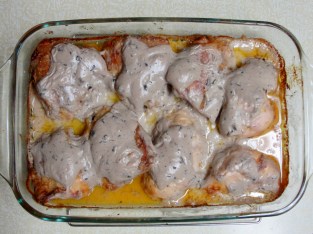 ooked so inviting in the baking dish that I would not be ashamed to set it on the table in front of guests.
A note on salt. We usually cook with unsalted butter, so I used a half teaspoon of salt. If you use salted butter, you should reduce the salt to a third of a teaspoon. Remember, diners can always add a little salt if they wish, but salt is very difficult to remove from a dish when it has been cooked.
 Courage in the Kitchen