
Erynn’s Egg Bites

In 1973 we bought a copy of The Last Whole Earth Catalog, and we still have it. The 60’s and 70’s were the two decades most associated with the back-to-the-land culture, and though we never moved to a subsistence farm in the middle of nowhere, we had friends who tried it. We bought the catalog mainly because it was an important resource for anyone interested in doing things the old-fashioned way.

If you wanted to build a log cabin, learn how to raise goats or to make your own sandals, there were leads to the animals, tools, books and people who could help you. There were cookbooks listed as well. One of my favorites was Gourmet Cooking for Free, which included recipes for delicacies that people often discard, like beaver tail and moose nose. I searched Amazon and discovered that the book is now available in a Kindle edition in case you are looking for a recipe to turn that woodchuck in the back yard into a tasty stew.

While I was not looking for exotic meats, I stopped in at the Whole Earth Grocery shortly after I began working at the RiverTown Newspaper Group in River Falls, Wisconsin. I think that subconsciously I expected to find it staffed with people near my age who once dreamed of homesteading in Alaska. Instead, I found college students dedicated to the proposition that everyone should eat locally-sourced organic foods. That’s how I became acquainted with Erynn, manager of the store.

She liked the idea that I bought lots of yeast and baked most of our bread and that I, like her, felt that home-cooked foods were tastier and better for a person than most of the frozen and canned choices in the major supermarkets. We exchanged a few recipes. Here is one that I finally made. It’s a winner.

INGREDIENTS:

6 eggs
1 T cold water
1 tsp. olive oil
8-10 sausage links cut into pieces or 1/2 lb. bulk pork sausage
1/2 cup chopped red and/or green peppers
1 small onion (about 2 inches in diameter)
1 1/2 cups shredded sharp Cheddar cheese
1 cup unbleached all-purpose flour
1/2 tsp. baking powder
1/2 tsp. baking soda
1/8 tsp. garlic powder
1/4 tsp. salt, divided

 
PROCEDURE:

Clean and chop the onion and peppers into an eighth to quarter-inch dice and set them aside in a small bowl. If you are using sausage links, cut them into thin rounds.

Cook the meat in a skillet over moderate heat until it is no longer pink and just beginning to brown. Use a wooden spoon to break the meat into small pieces as it cooks if you are using bulk sausage. Set the meat aside in a mixing bowl.

Preheat the oven to 350º and lightly grease a cookie sheet.

Put the chopped pepper and onion into the pan and cook for about three minutes until the vegetables are tender but still crisp. Remove the pan from the heat and put the vegetables into the bowl with the meat. Grate the cheese and add it to the bowl. Mix everything together.

Heat the pan and coat it with a teaspoon of olive oil over moderate heat. Beat the eggs until they are lemon colored with one-eighth teaspoon of salt and a tablespoon of water. Lightly scramble the eggs over low heat until they are cooked but not dry.

Measure the flour, baking powder, baking soda, garlic powder and an eighth teaspoon of salt into a sifter and add the flour mixture by thirds to the meat and vegetables. Mix the ingredients to the consistency of meatloaf. Fold the eggs into the meat mixture until the eggs are uniformly combined.

Form balls about three inches in diameter and slightly flatten them to make thick patties. Place them two inches apart on the cookie sheet and bake for eighteen to twenty minutes until they are lightly browned.

Depending on how big you make them, you will have eight to ten Egg Bites. Enjoy!

NOTES:

Erynn noted that you can substitute bacon cut in small pieces and lightly cooked for the sausage and implied that you could use other varieties of Cheddar cheese. She also specified organic flour, but I must confess to using Hudson Cream Flour. It is not certified organic, but it is an exceptional product made from hard winter wheat in Stafford County, Kansas. It is not carried by stores in the Upper Midwest, but you can order it from the mill. Just search for Hudson Cream Flour.

You can freeze Egg Bites and microwave the number you need in just a couple of minutes. They are perfect for mornings when you are running late or when you have houseguests and would rather enjoy a cup of coffee and visit with them instead of cooking breakfast.

Erynn made a very good point as she concluded her email to me. “Ohh— remember to keep your ingredients as local and organic as possible!!  It’s good karma and the taste is superior!”

She’s right.
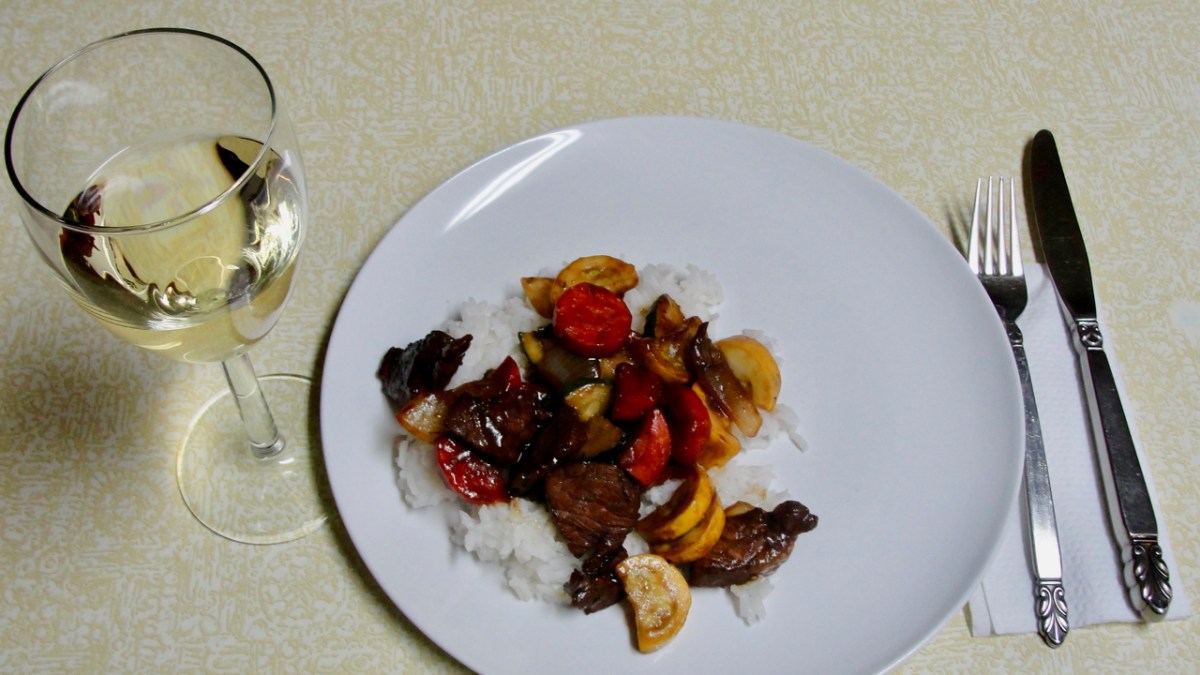
 

Pork and Squash Sauté

When I was growing up, there were no Community Supported Agriculture farmers or CSA’s. The first CSA’s appeared in the 1990’s. A majority of Americans still had a close connection to farmers, ranchers or gardeners. When children went to school they learned about the farmers who built our country. On the playgrounds, kids exchanged stories about grandparents, uncles and aunts who raised cows and pigs or chickens or planted huge fields of everything from alfalfa to sweet corn and carrots.

More than a third of the people in the United States in 1950 lived in rural areas. Today fewer than a fifth do. Much of the food we buy today comes from places we will probably never visit, let alone have some personal connection to the people of that area.

There are advantages to our international food supply system. Foods that were once seasonal are now available year round and other foods that were not available at all are now displayed on store shelves much of the year. People in Arizona can buy cranberries in November to go with their Thanksgiving turkey and those of us in the north country can enjoy fresh strawberries in January when our local strawberry fields are knee deep in snow.

There are disadvantages to our modern food chains as well. First, people are beginning to forget the connection between the foods they eat and the people who produce them. Second, the foods in the supermarket which often are shipped thousands of miles from the farms where they were produced can never be as fresh as those grown within a half hour’s drive of the store.

Community Supported Agriculture is a system designed to eliminate both of these disadvantages. When I was a kid, we enjoyed fresh foods grown by people we knew, which is what CSA’s make possible for people living in apartments or on city lots where it is not practicable to turn the lawn into a garden of peas, beans, beets, sweet corn or squash.

Squash. I love that gift from the Native Americans who domesticated squash plants thousands of years ago. It grows well as far north as Wisconsin and Minnesota and many squash varieties are prolific. In the first garden we had in Kentucky I planted five hills of zucchini. I learned my lesson. One can not even give away zucchini in Kentucky, except to very good friends who are too polite to say no. CSA farmers also love squash because it helps fill the boxes quickly.

Our son and daughter-in-law buy a share in a CSA at Stillwater, Minnesota, and the boxes include lots of squash. Irma does a good job with the vegetables in the box every week, but two adults and one two-year-old son can eat only so much. In a few years as the boy grows, they may have to buy an extra share to keep up with a growing appetite, but right now, Irma depends on us to help out when she has to empty last week’s box to exchange for a new box of veggies from the farmer. Thus, we get nice fresh vegetables from a local farm for free.

In return, I have been trying to answer Irma’s question of “What can I do with all this zucchini and yellow squash?” with some new recipes. Here is one I created recently that we liked a lot. It’s like a stir-fry, but I call it a sauté because I steam the onions and carrots to tenderize them and meld the flavors with the meat sauce before adding the squash to cook for just a few minutes before serving.

INGREDIENTS:

2 small boneless pork chops (2/3 – 3/4 lb.)
2 T vegetable oil, divided
1 T cider vinegar
1 T soy sauce
1/2 tsp. teriyaki sauce
1/8 tsp. garlic powder
1/4 tsp. powdered ginger
1 cup chopped yellow squash
1 cup chopped zucchini squash
1 cup chopped onion
1 cup chopped carrot
1 T water
1 tsp. chicken bouillon
1 tsp. corn starch
3 T water
Extra teriyaki sauce for seasoning

For the rice:

3/4 cup rice
1 1/2 cups water
1/2 tsp. salt

PROCEDURE:

Slice the pork into thin strips about an eighth of an inch thick by about one and one half-inches long. Put the meat into a small bowl. Add one tablespoon of vegetable oil, the vinegar, soy sauce, teriyaki sauce, garlic powder and ginger. Stir to make sure all pieces of meat are covered and allow the meat to marinate for a half hour or forty-five minutes while you prepare the vegetables or relax with a glass of wine.

Wash the squashes, remove the stem and blossom ends and and chop them into quarter-inch slices. Put them in a small bowl. Clean the onion and chop it into a half-inch dice and put it into another small bowl. Peel or scrape the carrot, cut it into quarter-inch rounds or half rounds and put them into a small bowl.

You can start cooking after the meat has marinated at least half an hour.

Rinse the rice and put it into a one quart saucepan. Add the water and salt and set the pan over high heat. When the pan has come to a boil, reduce the heat to a low simmer and cook the rice about twenty minutes or until all the water is absorbed. Fluff after the rice has absorbed the water.

After the rice has cooked for five or six minutes, put a tablespoon of oil into a large skillet over moderate heat. Add the meat with the marinade and sauté for five to six minutes, then add the onions and carrots. Add a tablespoon of water and cook for four or five minutes until the carrot starts to soften, stirring occasionally.

Add the squash and cook for about four minutes, stirring occasionally.

Dissolve the bouillon and corn starch in the water and stir it into the pan. Keep stirring until the sauce is clear, then add a teaspoon of teriyaki sauce.

Stir and serve over the rice. Offer soy sauce at the table. This recipe makes four servings.

NOTES: I have not tried it, but I think you could slice the meat and put it into the marinade in the morning before leaving for work and finish your dinner while the rice is cooking. Of course, you would not have time for the glass of wine if you did this.