Shrimp and Broccoli Stir Fry

I don’t like to peel raw shrimp. For me, peeling and deveining shrimp ranks above eating a pomegranate, but not by much. That’s why I use peeled cooked shrimp in my recipes. Purists and gourmets will object, and I am sure that they are right, but I don’t like to peel shrimp. Taking off the tails of cooked shrimp is enough work. and people keep asking for seconds, so the things I make must taste pretty good anyway.

Maybe one reason people are cooking a bit less often today is that more people than we realize share my distaste for peeling shrimp. I complained every time I had to peel shrimp for a dish I love, Shrimp Etouffée, LINK until one day I substituted frozen cooked shrimp which I decided produced the same wonderful flavor of the original and saved me a half hour’s tedious labor. I hope that this confession encourage others to make some shrimp dishes that they have been avoiding.

I put this recipe together to make it as quick and easy to make as possible. You don’t need to mince the garlic or ginger or cook the shrimp ahead of time. You just stir the sauce ingredients together, wash and chop the broccoli and onion into pieces and pull the tails off the shrimp. Of course you have to cook the rice, but that takes about two minutes of actual preparation time. While the rice is simmering in the covered pan you are making the stir fry.

You will end up with a delicious dinner low in fat, calories and carbohydrates in half an hour.

INGREDIENTS:

2 T soy sauce
1 1/2 T oyster sauce
2 tsp. rice wine vinegar
2 T water
1/2 tsp. instant chicken bouillon
1/4 tsp. powdered garlic
1/2 tsp. powdered ginger
2 tsp. light brown sugar
1/2 tsp. toasted sesame oil
1/8 tsp. chili pepper flakes (optional)
1 tsp. cornstarch
1 T vegetable oil
3 cups broccoli florets
1 small onion (about 2 inches in diameter)
12 oz. cooked medium shrimp
1 scallion (optional)
Dash of salt (optional, to taste)
1 cup white rice
2 cups water
1/2 tsp. salt

PROCEDURE:

Make the sauce first. Combine the soy sauce, oyster sauce, garlic, ginger, vinegar, water, bouillon, brown sugar, sesame oil, pepper flakes (if you wish) and cornstarch. Whisk everything together and set the sauce aside.

Thaw the shrimp if necessary, remove the tails and set the shrimp aside in a bowl. Clean and chop a scallion into thin rings if you wish and set them aside in a small bowl. Wash the broccoli and separate three cups of florets. Cut the stem and root ends from the onion, remove the dry outer layers and slice it vertically. The safest way to do this is to cut the onion in half lengthwise, then cut each half into thin strips lengthwise.

Rinse the rice and bring two cups of water and the salt to a boil in a one quart pan with a tight-fitting lid. Stir in the rice and bring the pan back to a boil. Turn the heat down to a simmer, put the lid on and allow the rice to cook until the water is all absorbed. Do not remove the lid for the first fifteen minutes. Turn off the heat and fluff the rice with a fork before serving.

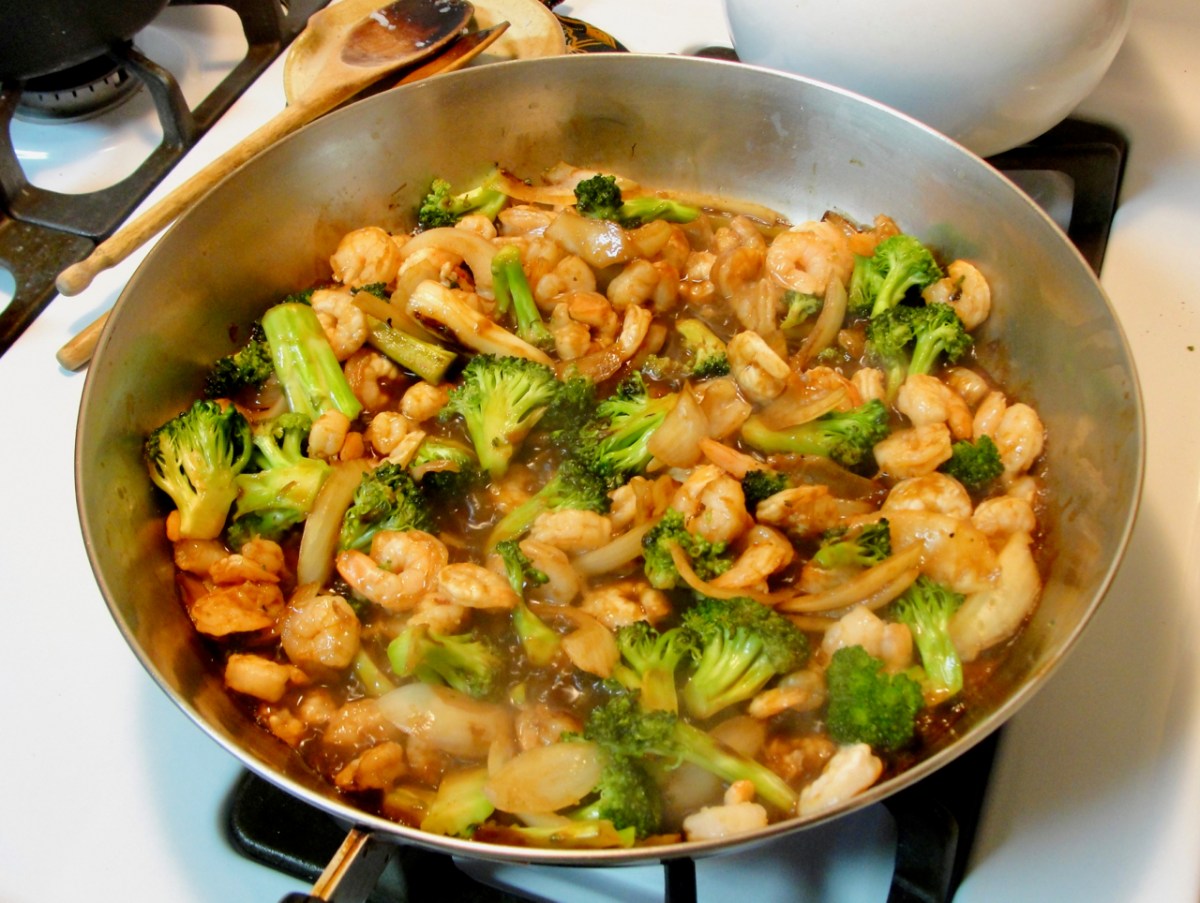
Once the rice is cooking, put a tablespoon of oil into a wok or large skillet over moderate heat. Stir the broccoli and onion into the oil and cook for about two minutes, then add the shrimp and continue cooking and stirring another two minutes. Pour the sauce over the shrimp and vegetables and stir until the sauce thickens and everything is warm.

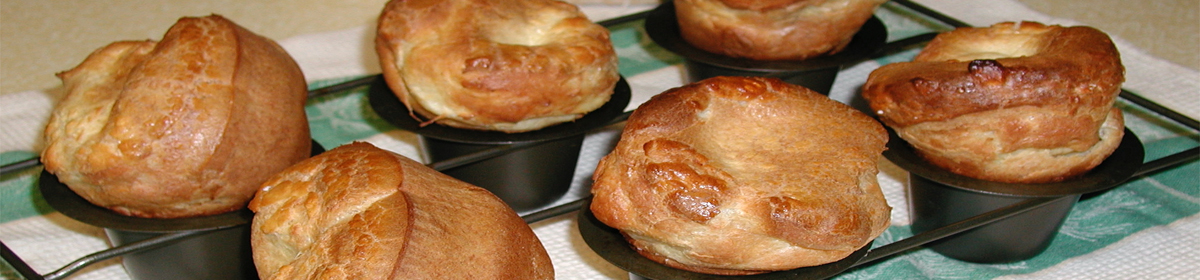
Serve over the rice and garnish with the scallion rings if you wish. Freshly baked bread goes well with this dish.

NOTES: Some time ago I read an article about how chefs use parts of vegetables that a lot of people throw away. One example is the thick stems of broccoli. I now trim the cut ends of the broccoli heads from the store and chop the stems into pieces that will cook along with the florets.
Pork Fried Rice

Rice, vegetables and pork are the three core ingredients of Chinese cooking. As is the case with many food plants, scientists are not sure when and where rice was first cultivated, but they do agree that it happened in southeast Asia between 8,000 and 13,000 years ago. The oldest records are from China and show that rice has been an important food there for thousands of years.

Fried rice also has a long history. Reay Tannahill in Food in History notes that a recipe from Li-Chi, a book of ritual from the Han dynasty (200 B.C. to 220 A.D.), contains eight recipes to be made for senior citizens. One of them is for rice fried with crisp pieces of fat from a wolf’s breast, a dish prepared to honor old people.

Even 2,000 years ago, fat from a wolf’s breast was almost certainly a delicacy reserved for special occasions and personages. Pork, however, was already a common meat in China 4,000 years ago, and Chinese cooks probably have been combining leftover rice with meat and vegetables to make a tasty and economical dish for at least a couple thousand years.

More than fifty years have passed since I first tasted fried rice. My mother made rice pudding and she served us her version of chop suey over rice, but as far as I remember, she never tried to fry leftover rice. Instead, she would add it to soup or heat it with milk and sugar to make a breakfast dish. It was sometime during the winter of 1961/62 at the University of Wisconsin that a girl in one of my classes suggested that we eat Chinese when I asked her out to dinner.

She was from Milwaukee and familiar with the three major advantages of Chinese restaurants for students. The food is tasty, servings are generous and prices are reasonable. Fried rice is one way that Chinese restaurants maintain those advantages today. Rice is inexpensive, especially when it offers a way to use leftover white rice, and a few finely chopped vegetables provide color, flavor and texture.

There are thousands of recipes for fried rice from plain to elaborate. The simplest use only rice, some cooking oil and seasonings. The more elaborate add ingredients ranging from costly, like steak and black truffles, to inexpensive like pork and common vegetables. Having a limited budget, we opt for the inexpensive. Believe me, it still tastes darn good.

INGREDIENTS:

3 T vegetable oil, divided
1 small boneless pork chop, 6 to 8 ounces
Dashes of salt and freshly ground black pepper
1/4 cup chopped scallions plus one or two for garnish
1 rib celery
1 medium carrot
1/2 cup fresh or frozen green peas
1 large egg
2 cups day-old cooked rice
1 clove garlic or 1/8 tsp. garlic powder
1/2 tsp. minced fresh ginger or 1/8 tsp. ground ginger
1 T soy sauce

PROCEDURE:

Have all the ingredients ready to combine in a wok or large non-stick skillet before starting. Begin by taking an egg and the rice from the refrigerator and letting them warm a bit.

Cut the pork chop into thin slices about an inch long and set them aside in a small bowl. Clean and chop three or four scallions into a quarter inch dice and put them into a mixing bowl. Clean a rib of celery and the carrot. Chop the celery into half-inch pieces and the carrot into eighth-inch slices or half-round slices and add them to the scallions along with a half cup of fresh or frozen green peas. If you are using fresh ginger and garlic, mince about a half teaspoon of each and set them aside in a small bowl.

Heat two tablespoons of oil in a wok or large non-stick skillet over medium heat. Add the pork and stir fry it for about three minutes, seasoning it with a little salt and pepper. Add the carrot, peas, celery and scallions and continue cooking until the pork is done, another four or five minutes. Remove the meat and vegetables to a bowl and return the skillet to medium heat.

Heat another tablespoon of oil. Using a wooden spoon or fork, beat the egg until it is lemon colored, then scramble it vigorously in the skillet until it is completely set and in small pieces. Reduce the heat to low and add the rice, soy sauce, garlic, and ginger. Stir gently, fluffing the rice and breaking up any clumps for about a minute. If the rice sticks to the skillet, add a little more oil. Return the meat and vegetables to the skillet and cook until everything is heated through, four to five minutes.

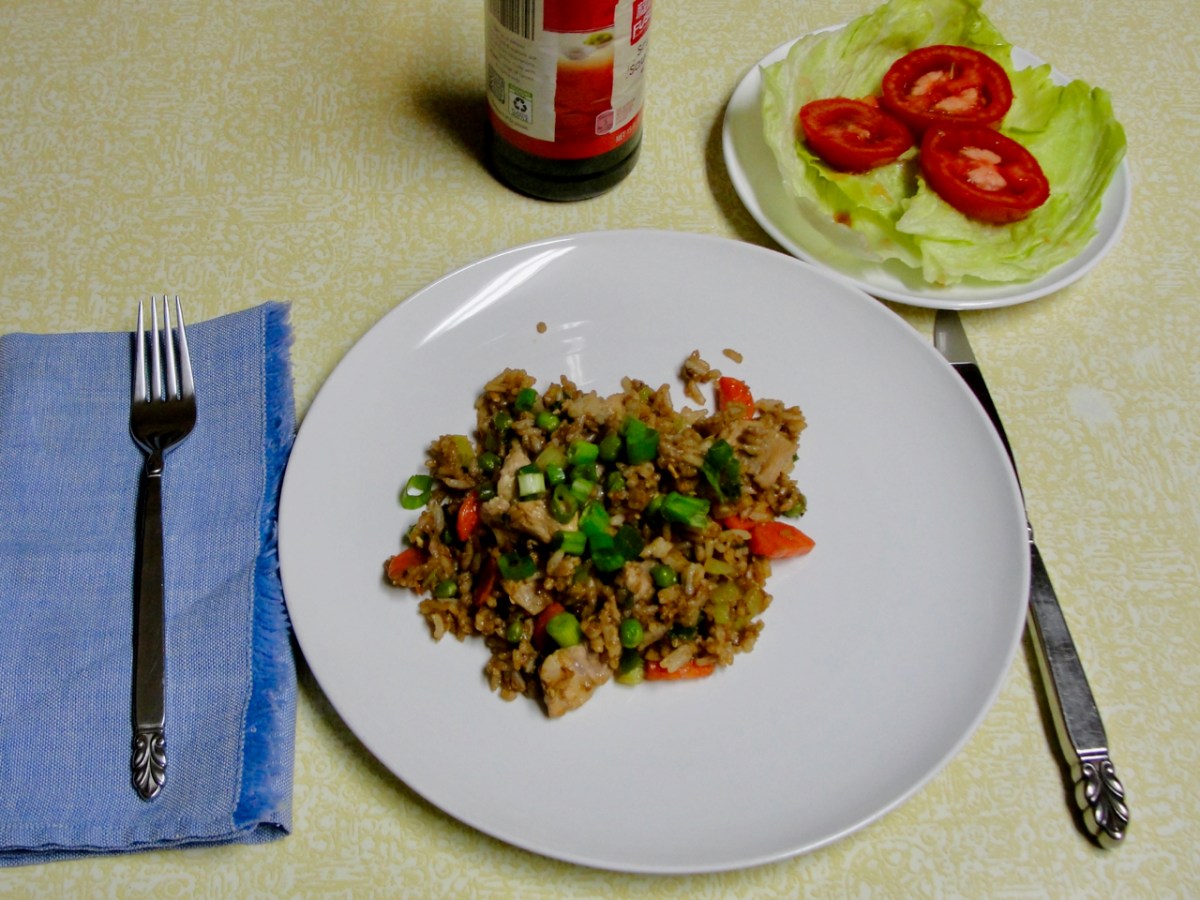
Serve with a green salad for a lunch or light dinner. Pass the soy sauce.

NOTES: You really need day-old or even two-day-old rice to make good fried rice. White or brown rice work work equally well, but you should use long-grain rice. We almost always have leftover rice when we have Pork and Broccoli or Jalapeño Beef Stir Fry, but you can cook some rice a day or two in advance and store it in the refrigerator. Though I cannot speak from experience, I understand that freshly cooked rice makes mushy fried rice.

Be careful not to use too much oil, and never add water. If you want to be fancy, chop a scallion into thin rings and sprinkle a few over each serving as a garnish.