
I sometimes attribute my fondness for mushrooms to the fact that my father claimed not to like them, a teenage rebellion that I never outgrew. My mother did not always respect his opinion, especially when it came to using cream of mushroom soup in her noodle casserole. He would sit down at the table, mutter something about poisonous mushrooms and dig in with the rest of us.
Mom’s Tuna Noodle Casserole was a popular dish with us kids. It was also one of her favorites, because it was easy to make, and even Dad approved of it, since it was a cheap way of filling up growing kids.
However, none of us would have thought of cooking Paccheri with Mushroom Sauce. We had never heard of paccheri, Mom never cooked with wine and would not have risked a battle with Dad by making a sauce of ground-up and sliced mushrooms that did not come in a can.
If you like pasta, you will probably enjoy Paccheri. They are large tubes cut in inch-long sections. There are many recipes for stuffed paccheri that I am tempted to try sometime, but this recipe for paccheri with a mushroom sauce is a quick and simple way to put a tasty dish on the table to please anyone who likes mushrooms.
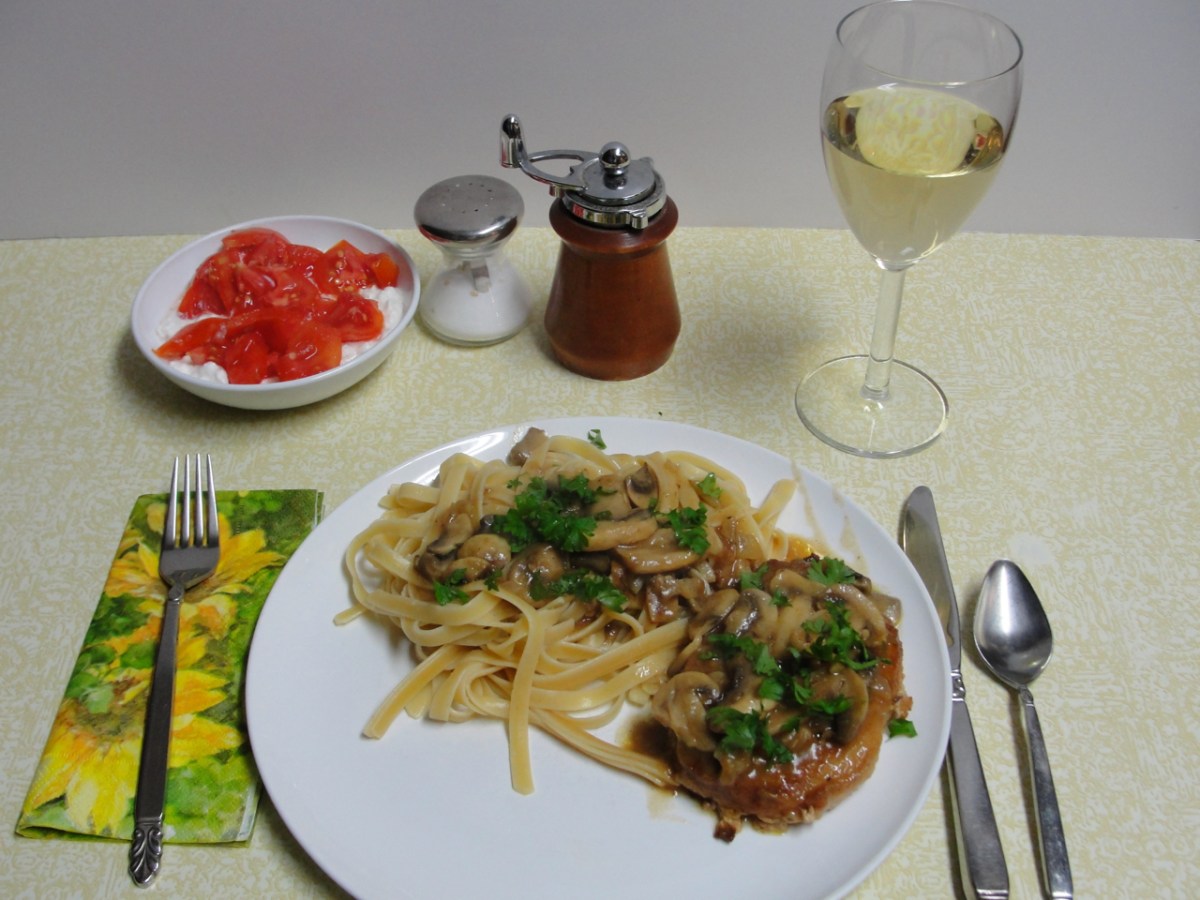
As you can tell from the photo, it is not a particularly colorful dish. Most edible mushrooms are white or various shades of brown and gray, and once they are cooked and puréed the result unfortunately looks like fresh concrete.
But the flavor!! If you enjoy mushrooms, I can promise you that you will not be disappointed. You can use white button mushrooms, but I think that crimini (baby bella) mushrooms have more flavor, and you can combine mushrooms if you wish. A good combination is a half and half mixture of crimini and shitake mushrooms.
The basic recipe comes from Ciao Italia, the longest running television cooking program on PBS. I changed it a little to suit our tastes. Here is what I did and what I recommend.
INGREDIENTS:
3/4 lb. mushrooms, divided
4 T unsalted butter
1/4 cup pine nuts
1/3 cup olive oil
2 cloves garlic
1/2 cup dry white wine
1 and 1/4 tsp. salt, divided
1/8 tsp. freshly ground black pepper
1/2 cup grated Parmesan cheese
12 oz. package of paccheri
Water for cooking the pasta
Parsley for garnish
PROCEDURE:
Put two or three quarts of water in a large saucepan over moderate heat.
Wash and slice the mushrooms. Melt the butter in a nine-inch skillet or saucepan over moderate heat. Add a cup of the mushrooms and the pine nuts and cook them for five or six minutes until the mushrooms are soft. Transfer the mixture to a blender cup or food processor and make a nice gray purée.
Mince the garlic while the mushrooms and pine nuts are cooking.
Heat the oil in a large skillet over low heat, add the garlic and cook for about two minutes. Do not brown the garlic. Put the remaining mushrooms into the pan, raise the heat to moderate and cook for about four minutes, stirring often.
The pasta cooking water should be boiling by about this time. Add a teaspoon of salt and the paccheri and cook to al dente, about sixteen minutes.
Stir a quarter teaspoon of salt and a half cup of wine into the mushrooms and garlic in the skillet. Reduce the heat when the mixture comes to a simmer, stir in the purée and keep the sauce warm while the pasta finishes cooking.
Test the paccheri for doneness. Drain the pasta, reserving a half cup of the cooking water.
Add the paccheri and the half cup of cooking water to the sauce in the skillet. Sprinkle a quarter cup of Parmesan cheese and grind about an eighth teaspoon of black pepper over the mixture. Mix thoroughly, taste and adjust the seasoning.
Serve with a garden salad, bread and the same wine used for the sauce. Garnish with parsley and pass the remaining grated cheese.
NOTES: I tend to use sauvignon blanc or Chardonnay wine when a recipe calls for dry white wine, but there are lots of good Italian wines such as Soave that an Italian might prefer.
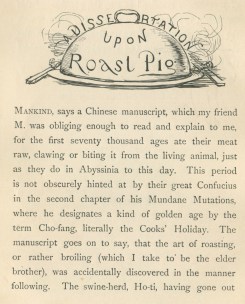 when I was ten or eleven years old. “A Dissertation Upon Roast Pig” is now nearly two hundred years old, but it still tickles my fancy. In it, he explains how roast pig was invented long ago in China.
 Courage in the Kitchen