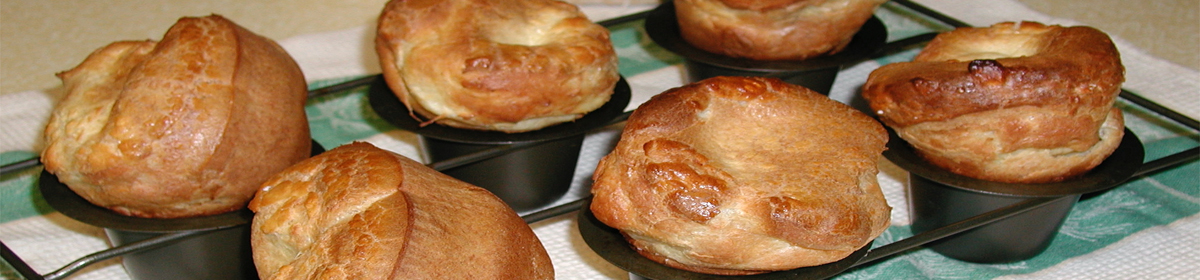
On a sheet of unlined 8 1/2 by 5 1/2 inch paper from the kind of tablet Mom bought for writing letters is her recipe for No-Knead Rolls. It’s one of a hundred or more recipes jammed into a recipe card box. Mom scratched “From Charles XMAS 1955” on the back of the box so I gave it to her when I was twelve years old.
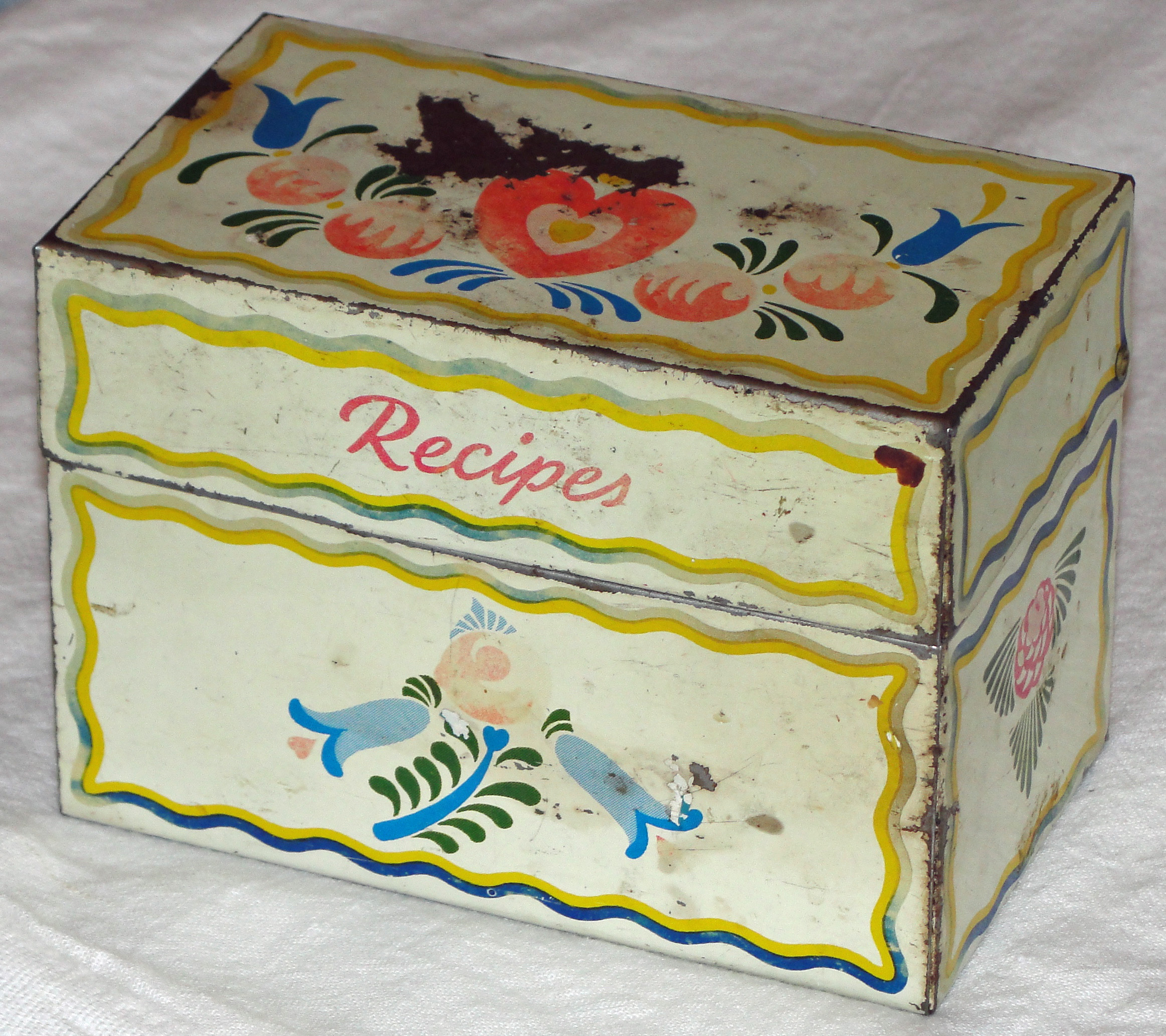 It’s a tin box made in the USA by the Ohio Art Company with a floral design and “Recipes” imprinted on the front of the hinged cover. Last year I found one like it offered as a collector’s item on ebay. My sister, Patsy, who is the guardian of most of Mom’s recipe books, loaned it to me two years ago, and I have been reading through the recipes as I look for ones that seem familiar to me.
Before listing the ingredients Mom noted that the recipe makes one and half dozen rolls. This suggests why she saved this recipe. Mom baked lots of bread, but sometimes she would want to have rolls to serve warm from the oven rather than slicing bread she had baked a day or two earlier. This recipe produces enough rolls to satisfy a table of guests without burdening the breadbox with too many leftovers.
If there were any rolls left over, she could always offer to wrap a few for someone to take home. Odds are good that there were takers. These rolls are delicious, especially if you add the cup of cheese Mom suggests to make cheesy dinner rolls.
INGREDIENTS:
3/4 cup water, divided
1 1/2 tsp. salt
1/4 cup sugar
3 T shortening
1/2 cup evaporated milk
2 1/4 tsp active dry yeast (1 package)
1/4 cup warm water
2 large eggs
3 – 3 1/2 cups sifted all-purpose flour
PROCEDURE:
Bring a half cup of water to boiling and pour it over the salt, sugar and shortening in a mixing bowl. Stir until the shortening is melted. Heat a quarter cup of water to lukewarm in a cup or small bowl and stir in the yeast to proof.
Stir the evaporated milk into the hot water and shortening and allow it to cool to lukewarm. Add the proofed yeast to the other liquid ingredients. Beat the eggs until they are lemon colored and stir them into the liquid in the mixing bowl.
Stir about half the flour into the liquid and mix it well, then beat in more flour a half cup at a time until you have a stiff but not a dry batter. You will know it is the right consistency when the batter becomes elastic and follows the spoon as you stir. Cover the bowl with a damp kitchen towel and set the bowl in a warm draft-free place. Let the dough rise until it has doubled in bulk, usually in about an hour.
Stir the dough down and let it rest while you grease muffin tins with enough cups for eighteen to twenty rolls. Fill the cups a little more than half full and cover the tins with the damp towel.
Preheat the oven to 375º about twenty minutes after filling the muffin cups. Put a couple of tablespoons of water in any empty cups. When the dough rises to the top of the cups, put the tins on the center shelf in the oven and bake until the rolls are lightly browned, fifteen to twenty minutes.
NOTES: Mom’s recipe card included an option for “cheesy dinner rolls.” Fold a cup of shredded sharp or extra sharp Cheddar cheese into the batter just before you fill the muffin pans. I have tried it, and the rolls are wonderful this way too.
This recipe is perfect for the beginning baker. It will teach you that making bread dough is not difficult, that you can adjust the liquid and dry ingredient ratio if necessary and that yeast really does make dough rise. There’s no need to knead. You just stir and spoon the batter into the muffin tins, let it rise again and bake the tasty little morsels.
This recipe is a good one for learning to trust your eyes. Open the oven door after fifteen minutes to see how your rolls are browning. If they look done, take them out. If it turns out you should have baked them longer, they will still be edible. If you must, you can finish them in the microwave for a few seconds.
 Courage in the Kitchen