Whenever I think of barley, I am reminded of “The Lady of Shalott“ by Tennyson:
“On either side the river lie
Long fields of barley and of rye,
That clothe the wold and meet the sky;
And thro’ the field the road runs by
To many-tower’d Camelot….”
Those opening lines are a wonderful example of Tennyson’s genius for creating music with words. I doubt that he meant for anyone to think that the Lady of Shallott ate barley, since by Tennyson’s time, barley was a grain eaten mainly by common people, used to brew beer, make fine whiskey and feed cattle.
Barley and rye grow very well in cool climates and both have been staple foods for over ten thousand years. The earliest archeological evidence that people were eating barley is from a site on the southern end of the Sea of Gallilee. They were gathering wild barley along with einkorn and emmer wheat, but by 4,200 B.C. domesticated barley was being cultivated as far away as eastern Finland. Barley was being used to make beer at least 5,000 years ago.
It is still an important ingredient in certain breads and soups from the Shetland Islands to Saudi Arabia, and it has become more popular in recent years among people concerned about a healthy diet. Since it contains generous amounts of valuable nutrients, is higher in soluble fiber than oats and has been shown to help control blood sugar and cholesterol levels, barley is a good addition to at least one meal every week.
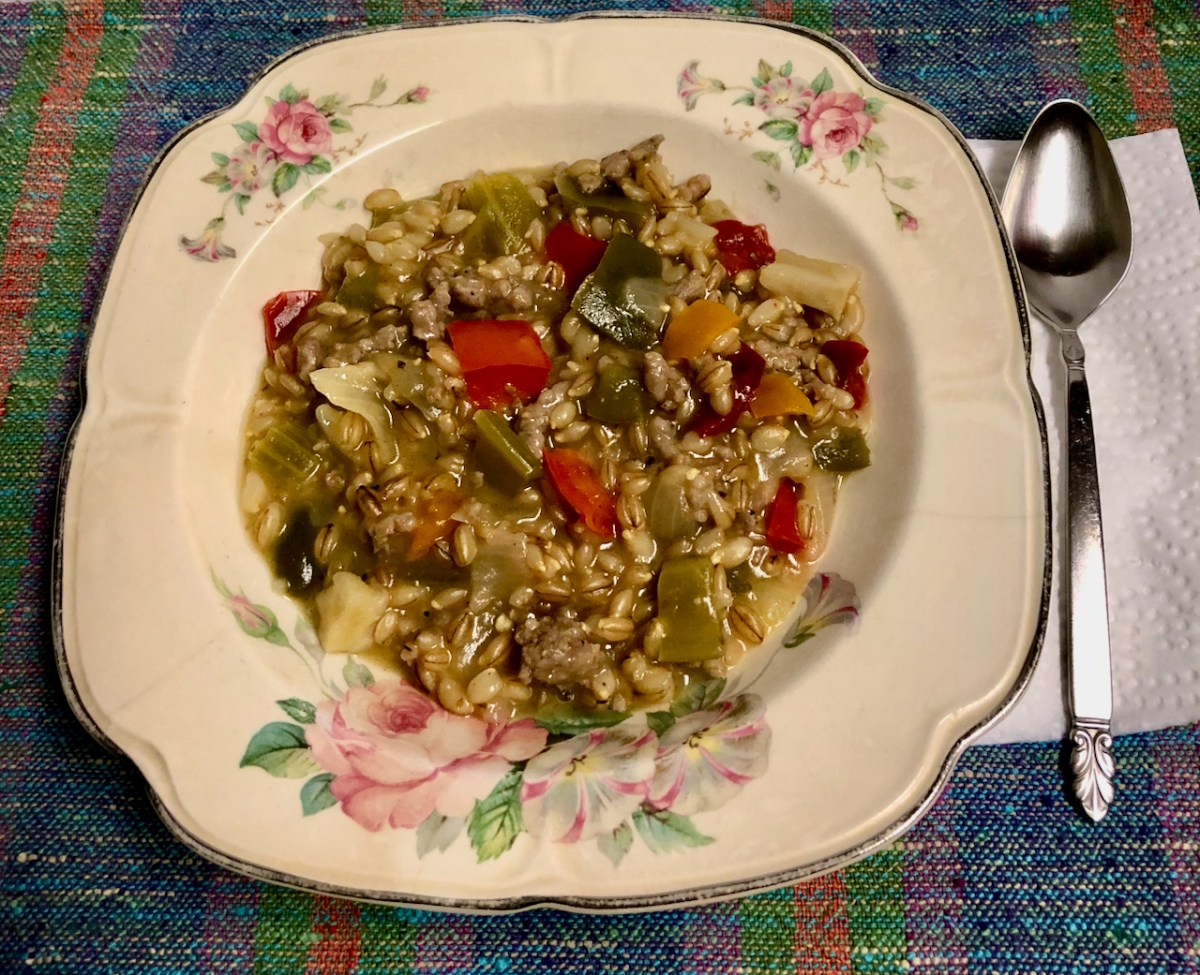
If you are looking for a different kind of casserole, here is a version made with hull-less barley. You can compliment yourself for making a dish with proven health benefits, but even better, you can enjoy the nutty flavor of hull-less barley in a delicious casserole. A main dish that is good for you and tastes good! It’s worth a try.
INGREDIENTS:
3 1/2 cups water
1 cup hull-less barley
1/2 lb. pork sausage
3 T butter, divided
1 large onion, chopped
2 ribs celery, chopped
1 green bell pepper (about 1 cup chopped)
1/2 red bell pepper (about 1/2 cup chopped)
1/4 tsp. sage
1/3 tsp. marjoram
1/4 tsp. freshly ground black pepper
Dash of cayenne pepper
1/2 tsp. salt
2 T all-purpose flour
2 cups chicken broth
PROCEDURE:
Put a cup of hull-less barley into a two quart saucepan. Add three and a half cups of water, bring to a boil and simmer covered for about 40 minutes. Drain the barley and set it aside.
Preheat the oven to 350º.
Melt a tablespoon of butter in a Dutch oven or oven-safe pot over medium heat. Add the pork sausage and break it into smaller pieces as it cooks until it is gray. Clean and chop the onion, celery and peppers into a half inch dice while the meat is cooking.
Add the onion and cook it a couple of minutes until it is soft. Then stir in the celery and peppers, spices and salt and continue cooking the mixture for another four or five minutes.
Melt two tablespoons of butter in a saucepan over moderate heat and stir in two tablespoons of flour. You are making a roux for a thin sauce. When the flour begins to bubble, reduce the heat to very low and cook the roux for about two minutes. Do not brown the flour. Pour in the broth and raise the heat, stirring constantly. When the sauce begins to thicken, reduce the heat to low. Keep stirring and cook the sauce another two minutes.
Mix the barley into the vegetable and sausage mixture. If you want to include mushrooms, this is the time to do it. Stir the sauce into the barley mixture and transfer it to the casserole.
Bake covered on a center shelf in the preheated oven for about thirty minutes. Remove the cover and check the sauce. If it is too thin, bake the casserole uncovered for a few minutes. If the casserole is too dry, stir in a little water or broth and heat a couple of minutes. Taste and adjust for saltiness before serving.
NOTES: If you wish, clean and slice some fresh mushrooms to add an extra layer of complexity to the casserole.
 Courage in the Kitchen