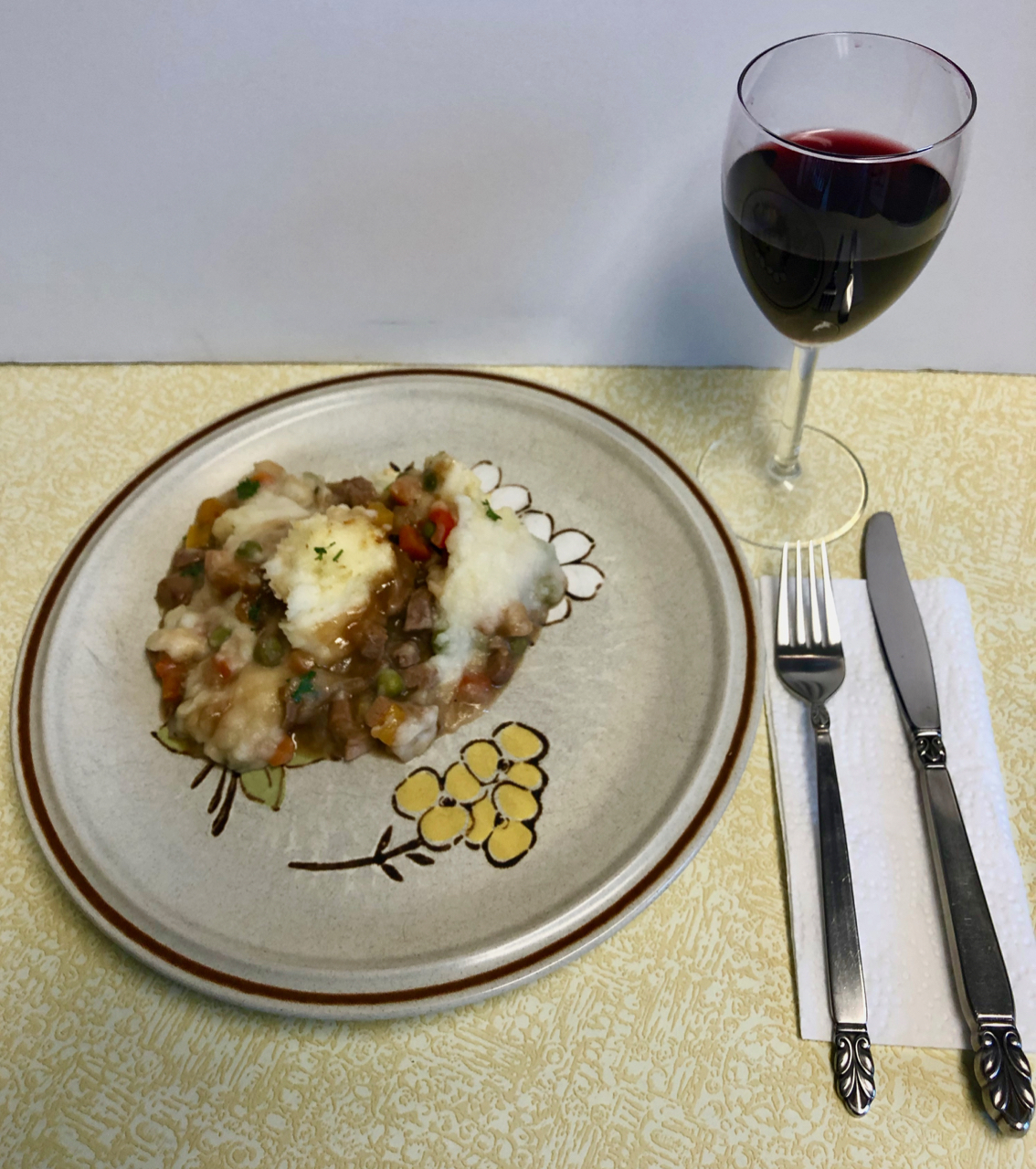
Here is a simple and inexpensive way to turn leftover roast mutton, lamb or beef into a delicious dinner. Recipes for Shepherd’s Pie date from the end of the eighteenth century, but it was called Cottage Pie then and could be made with any leftover roasted meat. In the eighteenth century, a cottage was a simple shelter where poor people lived in the rural areas of England and Ireland, so a Cottage Pie was something cheap enough for poor people to eat.
Potatoes had become a cheap edible crop by that time, so they went well with the leftover meat. The earliest recipes tell the cook to line the sides and bottom of the pan with mashed potatoes before spooning in the filling and covering the meat with more mashed potatoes, so some of those pies may have had very little meat. If there were a few vegetables and some fat and flour to make the gravy, the result could still be a nourishing and tasty hot dish.
It wasn’t long before people with extra money learned about the dish and were making fancier versions. Poor people used any meat they could afford or come by in the dark of night. Wealthier people could afford to eat roast mutton or lamb on Sundays, so they started making Shepherd’s Pie, a name chosen because shepherds looked after sheep.
This recipe is my version of one I found in a cookbook published by the Church of the Immaculate Conception in New Richmond. Mary Sullivan’s recipe specifies hamburger and cream of mushroom soup, but I liked her additions of green peas and carrots, the bell pepper and seasoned mashed potatoes, so I think she deserves credit for inspiring me. My recipe, however, is a little closer to a real shepherd’s pie with good brown gravy and diced lamb left over from our Easter dinner.
INGREDIENTS:
For the gravy:
4 T roast drippings or butter
4 T all-purpose flour
1 1/2 – 2 cups stock or beef broth
Salt, pepper and other seasonings to your taste
For the pie:
2 to 3 cups chopped roasted lamb
1 T vegetable oil
1 cup chopped onion
1/4 tsp. salt
1/2 cup diced bell pepper
1 T all-purpose flour
About 2 cups brown gravy
2 cups frozen peas and carrots
2 cups mashed potatoes
4 T butter, divided
1/3 to 1/2 cup half and half
1/4 tsp. white pepper
2 tsp. chopped parsley (fresh or dried)
PROCEDURE:
Trim the bones and excess fat from the meat, and chop it into a quarter-inch dice. Clean and chop the onion and pepper into a quarter-inch dice. Otherwise, cook the frozen vegetables until they are crisp tender. Peel and boil the potatoes. Make or warm the gravy.
Making brown gravy from scratch is easy and takes only a few minutes. Put four tablespoons of lamb or beef roast drippings or four tablespoons of butter into a medium saucepan or skillet over moderate heat. Blend a quarter cup of all-purpose flour into the oil and stir continuously until the flour has turned to a medium brown. I like to add some seasoning to the browning flour. An eighth teaspoon each of salt, black pepper and thyme or rosemary are all good choices.
Whisk in one and one-half cups of beef broth or stock made from the leftover lamb or beef bones. Cook for three or four minutes until you have a thick gravy. Add a little more broth if the gravy seems too thick. Taste and adjust the seasoning.
Preheat the oven to 350º and lightly grease a two quart casserole.
Heat the oil in a large skillet and warm the meat. Stir in the flour and salt and add the onion and pepper. Cook over low heat until the onion is translucent. Blend the gravy, peas and carrots with the meat mixture.
Mash the potatoes and heat a third cup of half and half and three tablespoons of butter. Blend these liquids with the potatoes and the quarter teaspoon of white pepper. Spoon the meat mixture into the casserole and top it with the mashed potatoes. Dribble a tablespoon of melted butter over the potatoes.
Put the casserole on a center shelf in the oven and bake for fifty minutes or until the potatoes begin to brown a little. Sprinkle the parsley over the potatoes and bake for another four or five minutes.
NOTES: Many recipes for Shepherd’s Pie today are like Mary’s and substitute hamburger or leftover roast beef for the lamb. Drain any excess grease from the hamburger before adding the vegetables.
If you are using fresh peas and carrots, shell and rinse the peas and clean and chop the carrots into a half-inch dice.
 Courage in the Kitchen