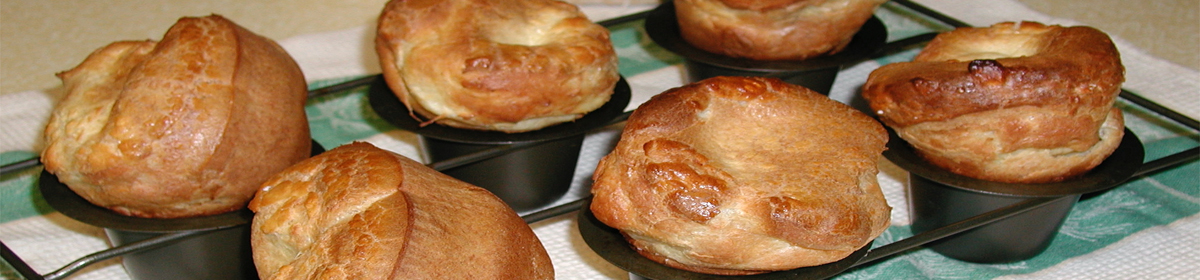
Every cook should have a disaster once in a while, if only as a reminder that no one is perfect. At least that’s what I tell myself when something goes wrong with a dish. A corollary might be that every cook needs someone to explain what caused the disaster. That pretty much sums up my situation as I write this explanation as to why my cream puffs failed to puff.
Cream puffs are made by following one of those magical recipes that transform ordinary ingredients into something wonderful. In this case, mix butter, water and flour together with a little salt and sugar, beat in some eggs and put globs of the stuff on a pan and bake in the oven. Pouff! The globs blow up into lovely cases that you can fill with whipped cream or puddings to create delicious desserts.
My mother made cream puffs at least once a month when I was a kid, and I think that I helped make my first batch of those lovely pastries when I was seven or eight years old. Since then I have baked cream puffs forty or fifty times, but I haven’t made any in the last few years. That interval, combined with my advancing age, most likely explains why my cream puffs did not puff.
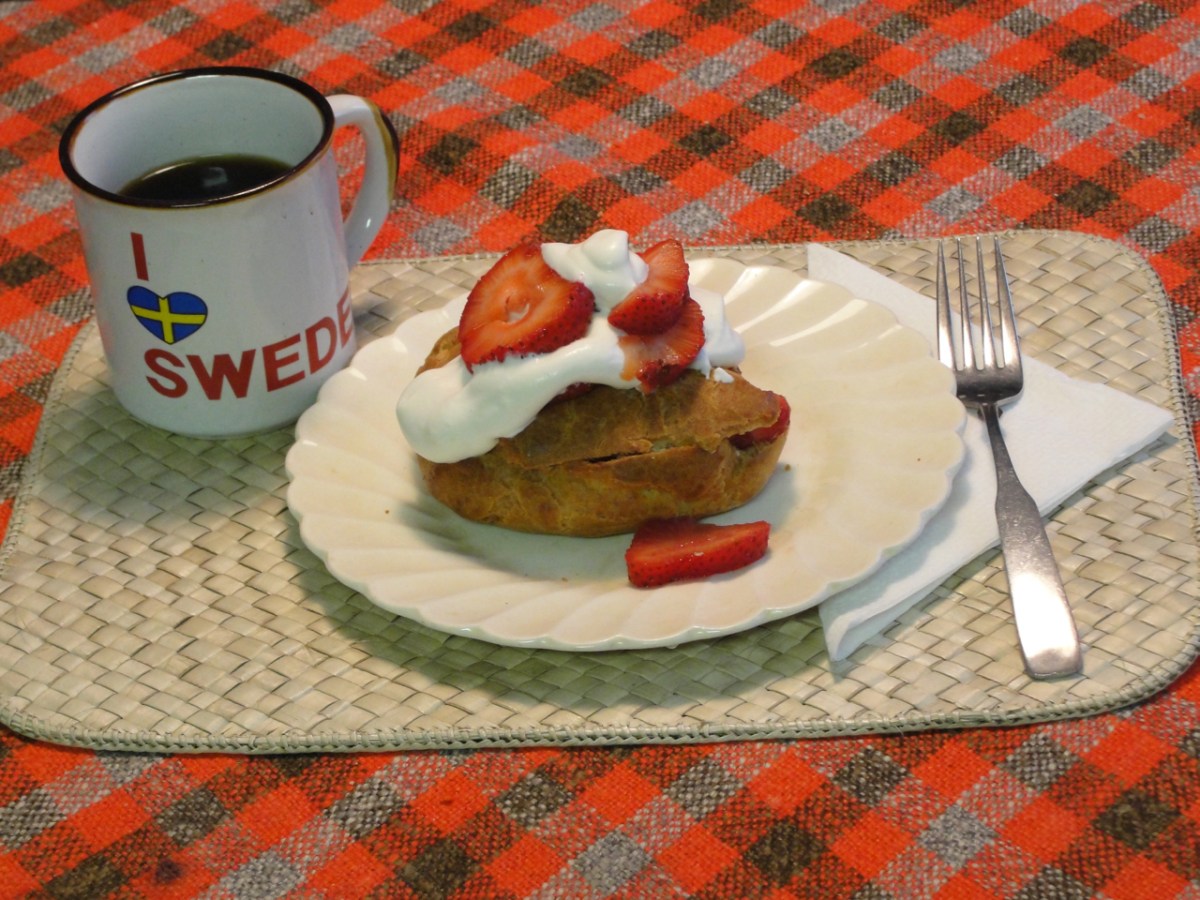
As I gnashed my teeth and lamented the fact that our son, daughter-in-law and grandson would not be enjoying the promised strawberry cream puffs, Jerri opened The Joy of Cooking and soon found the explanation for my failure. I had merely stirred and cooked the choux paste too long. Since our offspring were expecting dessert, we decided to cut open one of the nasty little blobs to see what might be done.
“Sort of like tough scones,” observed Jerri. “If we put extra strawberry juice and lots of whipped cream on them, they’ll be fine.”
That’s what we did, and our son and daughter-in-law politely ate their cream puffs and thanked me. Our twenty-three-month-old grandson has not yet learned the rules of social politeness, however. Like our Momma Cat from years ago eating all the food around the pill we had hidden in her dish, the kid scarfed down the strawberries and scraped most of the whipped cream into his little mouth but left the chunks of cream puff. Thinking that he had simply not realized that the pieces of stuff that looked like cardboard were edible, I offered him a piece on his spoon.
He scowled and shook his head and kept his mouth clamped shut. However, when I put a couple more slices of strawberry topped with whipped cream into his bowl, he shoveled them in and grinned at me. Now I am more determined than ever that he will learn to like my cream puffs.
UPDATE 6/21/17: It turns out that we have a new gourmet in the family. The little grandson ate two cream puffs yesterday and begged for more!
Here is how to make them the right way.
INGREDIENTS:
For the cream puff shells:
1/3 cup butter
1 cup milk
1 cup all-purpose flour
1/8 tsp. salt
1 T sugar
5 large eggs
For the filling:
Fresh strawberries
Heavy whipping cream
1 – 2 tsp. sugar
1 tsp. vanilla extract
PROCEDURE:
Set the eggs out ahead of time to come to a warm room temperature or put them into a bowl of warm water until they no longer feel cold.
Preheat the oven to 400º and lightly grease two large baking sheets.
Sift the flour into a measuring cup and use a knife to level off the cup. Return the extra flour to the flour canister and put the measured cup of flour into the sifter over a bowl. Add the salt and sugar and sift the mixture into the bowl.
Put the butter and milk into a heavy-bottomed two-quart pan over low to moderate heat. When the butter has melted, increase the heat until the liquid comes to a boil, then add the flour mixture all at once and stir vigorously. The flour will look funny to start with but will become smooth. Keep stirring fast until the dough stops clinging to the sides of the pan and leaves a smooth dent when pressed with the back of the spoon. Do not overcook the dough OR IT WILL NOT PUFF.
Take the pan off the heat and let it sit for two minutes, then stir in the eggs with the wooden spoon, one at a time. Beat after you add each egg until the dough no longer looks slippery.
When the last egg has been beaten into the dough, you are ready to make the cream puff shells. If you have a pastry bag, you can make very professional-looking cream puffs or eclairs. I use two spoons to make mounds with two or three tablespoons of dough for each cream puff. Mounds of dough should be separated by about three inches on the pans. You will be making one and one-half to two dozen cream puffs, depending on the size.
Sprinkle the dough with a few drops of water and put the pans into the hot oven. Bake for ten minutes, then reduce the heat to 350º and continue baking for twenty-two to twenty-six minutes longer. Test for doneness by tapping one of the shells. It should feel hard when you tap it.
Remove the pans from the oven and let the shells cool completely.
Whip the cream and prepare the strawberries just before you want to assemble the cream puffs. The amounts of cream and strawberries depends on how many cream puffs you need. Here are guidelines for enough to fill six cream puffs.
Wash and slice about a pint of fresh strawberries into a small bowl, sprinkle with a teaspoon or two of sugar and put the covered bowl in the refrigerator. Put a cup of heavy cream into a beater bowl and put it into the freezer about fifteen minutes before whipping the cream. Put the beaters into the freezer at the same time.
Start whipping on low speed for a few seconds until there are bubbles on top of the cream, then increase the speed gradually to high. Beat until the cream starts to thicken. Reduce the speed while you sprinkle in the sugar, then raise the speed and beat until the cream is nearly as thick as you want it. Add the vanilla and beat a few seconds to mix it in.
To make the cream puffs, used a serrated knife to slice the shells horizontally. Moist filaments inside can be removed and eaten as the cook’s reward for a job well done.
Put two or three tablespoons of sliced strawberries into the bottom half of the shell and top them with whipped cream. Replace the top half of the shell, cover with a spoon of strawberries and some more whipped cream.
NOTES: Use a quarter teaspoon of salt for the cream puff shell dough if you are using unsalted butter.
Extra shells don’t keep very well, so you have to use them in a day or two. My mother often made vanilla pudding and dribbled chocolate sauce over the tops of the cream puffs as if they were eclairs. Classic cream puffs simply have lots of whipped cream in them and are often garnished with a little powdered sugar.

 Courage in the Kitchen