I was squeezing lemons to get the juice for a lemon chess pie when I was reminded of helping squeeze oranges and lemons for my mother. Before the days of frozen concentrates in cans at the Co-op or A & P, if you wanted orange juice or lemonade you did what Mom and Dad did. You bought oranges or lemons, took them home and squeezed them in your kitchen.
Oranges and lemons were expensive, so a glass of orange juice on a winter morning was a real treat. We each got a small glass once or twice a month. After juicing the oranges, my mother soaked the pulp in some water and added it with a little sugar to make the juice go further. The result was what something like orangeade and we loved it.
Lemonade replaced orange juice in the summer, and we enjoyed some almost every week. The juice from three or four lemons could make a half gallon of lemonade complete with slices of lemon rind floating with the ice cubes. Perhaps Mom’s lemonade would not satisfy a gourmet, but we all loved it, especially on hot evenings when the mosquitoes drove us indoors to a house that felt like an oven.
As I pressed and turned the halves of three small lemons on the ridged glass cone in the center of what is technically called a juice reamer, I flashed back to how I did the same thing nearly seventy years ago at the kitchen counter next to the sink. I think that the only difference is that Mom’s juicer (or reamer) was made of pale green glass while ours today is clear.
You can still buy juicers like ours, probably because they are dependable and inexpensive. If you need to juice a lot of fruit, they are not for the weak of arm, but for making a half gallon of lemonade or getting a quarter cup of lemon juice for chess pie, they are more than adequate and work well even if the electric power goes off on a hot day and the air conditioner fails.
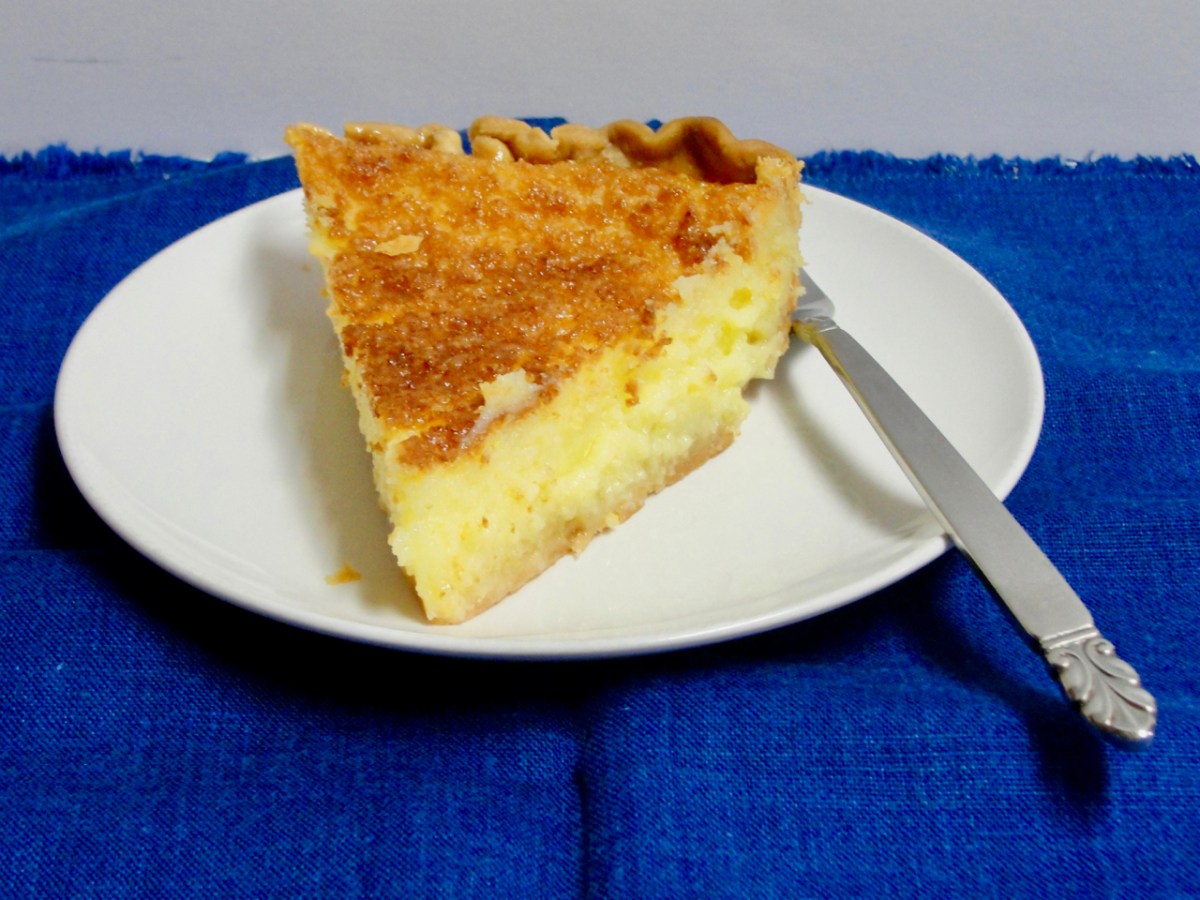
There are many different recipes for lemon chess pie. Like all chess pies, the ingredients include fresh lemon juice, eggs, sugar, butter and cornmeal or flour or both. Chess pies are usually thought of as a southern specialty, but there are variations from northern states as well. Mildred Jorgensen, who gave our children piano lessons and was organist at St. Luke’s Lutheran Church in New Richmond for many years, gave us a cookbook from the Cedarhurst mansion in Cottage Grove, Minnesota, that includes a recipe for lemon chess pie.
The recipe below produces a richer pie with a more lemony flavor than most lemon chess pies. That is probably why it is said to be Bill Clinton’s favorite chess pie.
Like all chess pies, it is really easy to make.
INGREDIENTS:
2 cups granulated sugar
1/2 cup salted butter
5 large eggs
1 cup milk
1 T all-purpose flour
1 T yellow cornmeal
1/4 cup freshly squeezed lemon juice
The zest from two or three lemons (2 – 3 T)
1 nine-inch unbaked pie shell
PROCEDURE:
Begin by lining a nine-inch pie plate with a crust. You can make your own with this recipe for plain pie crust or use a commercial crust.
Bring the butter, eggs and milk to a warm room temperature. I microwave the butter under low power until it begins to soften, heat the milk at full power for a minute or so and put the eggs in a bowl of warm water.
Next, juice and zest the lemons. You will need two or three lemons, depending on the size. Remove the zest from the lemons with a zester or a kitchen grater and strain a quarter cup of juice. Set the zest and juice aside.
Preheat the oven to 350º.
Measure the sugar into a large mixing bowl and add the softened butter. Cream the butter and sugar with a wooden spoon until they are light and fluffy. Beat in the eggs one at a time, then stir in the milk.
Add the flour, cornmeal, lemon juice and zest and beat at medium speed for a minute with an electric mixer.
Pour the filling into the crust and bake on a center shelf for forty to fifty minutes. Use a table knife to check for doneness. Insert the knife near the center of the pie at forty minutes. If the knife comes out clean the pie is done. If not, bake another six or seven minutes and check again.
Let the pie cool completely before serving. Cut small slices as this is a very rich pie. If a diner asks for more, you can always relent with another small slice.

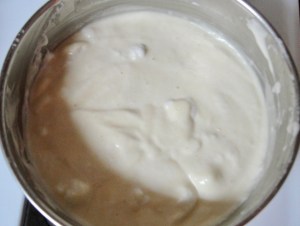 This is not difficult to do, and you can find videos and detailed tutorials online. Here is a photo of batter ready for baking. Note that you can still see a few small globs of beaten egg white in the batter.
 Courage in the Kitchen