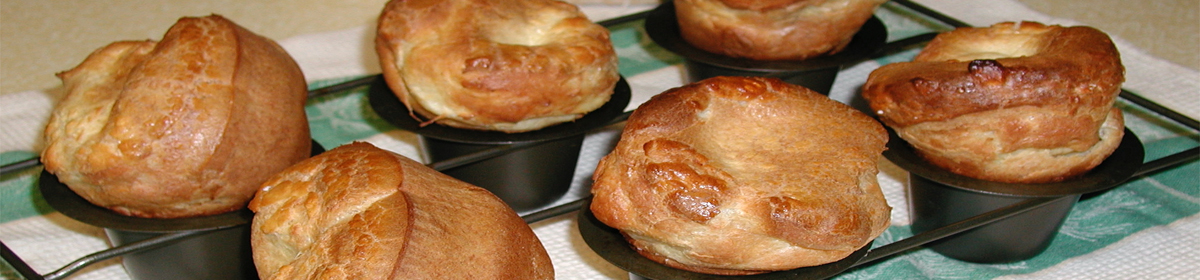
In a certain sense, making popovers is a test of faith: You put the batter-filled pan in the oven and pray that the popovers will do their thing in the next 40 minutes. I have been making these scrumptious muffins since I was a teenager.
Sometimes they were wonderful–standing tall and proud. More often they looked liked something trying with only limited success to look like popovers. On some memorable occasions (usually when we had friends over for breakfast) my popovers were rubbery little sponges hunkering down in the pan.
Months without popovers would pass after such failures, but as the poet said, “Hope springs eternal in the human breast”, and after enjoying a particularly delicious popover at a restaurant or fair I would tell myself that my memory was wrong: No one could screw up a recipe that had only five ingredients. And so I would try again and sometimes succeed.
I remember making two batches in a row that were beautiful. But when my mother came to visit and I announced that we would have an afternoon snack of popovers with butter and jam, the jinx returned. “Oh Chuckie, they taste just fine,” said Mom, but one of the kids remarked that they didn’t look like popovers. To make matters worse, motivated by my two successes, I had just bought a popover pan.
I finally tackled the problem systematically, and for the last twenty years I have never had a popover failure. Since it took me 30 years to figure out the secret to the perfect popover, I feel relieved, not proud.
There are two parts to the secret: First, the eggs and milk must be at WARM room temperature; 70 degrees is too cool. Second, don’t beat the batter too long. I know that many expert chefs say to beat the batter for 20 or 30 seconds. It must work for them and it may work for you, but don’t blame me if you get sponge cake instead of popovers.
This recipe makes enough batter for a six-cup popover pan.
INGREDIENTS:
1 cup plus 1 T flour
1/2 tsp. salt
1 cup plus 1 T milk
2 tsp. vegetable oil
3 large eggs
PROCEDURE:
Make sure that the baking rack in your oven is in or slightly below the center position. Preheat the oven to 450 degrees. Grease the popover pan lightly and place it in the oven to heat.
While the oven is heating, put the eggs in a small bowl and cover them with very warm water from the tap. Let them sit for at least 5 minutes. Warm the milk on the range or in the microwave until it feels slightly warm to the touch.
Stir the flour and salt together in a lipped 1 quart measuring cup or bowl. Add the warm milk, oil and eggs and beat the batter with an electric mixer for 11 seconds (NO MORE) on high. Stop and stir slowly with a fork to mix in any remaining large dry clumps. Small lumps are OK.
Take the hot pan from the oven and fill the cups evenly; they should be 1/2 to 2/3 full. Put the pan into the hot oven, turn the heat down to 425 degrees and bake 20 minutes, then 20 minutes at 350 degrees. DO NOT OPEN THE OVEN DURING BAKING. PERIOD.
Remove the pan from the oven, let it cool for 15 or 20 seconds, remove the popovers from the pan and serve them while still hot. Give each popover a gentle twist to loosen it. A table knife works to loosen stubborn popovers. If you want, cut a small slit in the side of each popover to release the steam.
NOTES: The eggs and milk must be warm. The oven door must remain closed during the entire baking period. Have faith. They will pop. You can make popovers in an ordinary muffin pan, but they don’t pop as high.
Besides eating popovers with butter and honey, jam or jelly, we also like to fill them with scrambled eggs.

 Courage in the Kitchen