Jerri’s Yorkshire Chicken

This is another recipe Jerri found in the Better Homes and Gardens Meat Cookbook long ago when we lived in Kentucky. My mother and father would have loved it, and I sure do.

The name is a play upon Yorkshire Pudding, a delectable dish made in England to accompany the beef roast traditionally served for Sunday dinner. The pudding seems to have originated in the north of England, and the first recipe was published in 1737. It was first called “Dripping Pudding” because it used the drippings from the roast. It was served before the roast, and may have been a cheap way to fill up the diners before the meat appeared.

Food historians believe that thrifty English housewives were making dripping pudding long before the recipe was written down. It is an obvious way to turn beef fat into something that people will want to eat rather than wasting it or feeding it to the dogs. Today, Yorkshire pudding is served as a side dish with the meat. It is still made with beef drippings and may be baked in a flat casserole or in muffin tins in a hot oven.

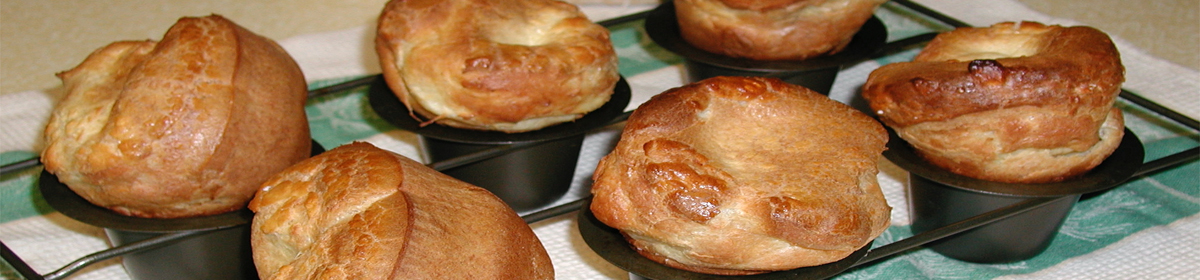
The ones baked in muffin tins look like collapsed popovers. When a waitperson offers you a popover before the steak arrives, that delicate muffin dripping butter on your fingers is the cousin of a humble pudding probably invented to stretch the meat budget.

Unlike Yorkshire pudding, which is baked separately from the meat, the batter for Yorkshire chicken is baked in the casserole with the meat. Since the chicken pieces have been browned before they are placed in the casserole, most of the fat has been rendered from the skin. The batter picks up flavor from the chicken without adding a lot of fat to the dish.

Jerri’s Yorkshire chicken has a simple batter that you pour over the chicken pieces. The pudding complements the chicken for a great Sunday dinner, and you have made the bread as well as the main course in one dish. I especially like the crusty pudding on the edges of the casserole.

INGREDIENTS:

3 to 4 lb. frying chicken
1 1/4 cups all-purpose flour, divided
2 tsp. salt, divided
1 tsp. ground sage
Dash of freshly ground black pepper
Dash of cayenne pepper
3 T shortening
1 tsp. baking powder
3 large eggs
1 1/2 cups milk
4 T butter
2 T chopped parsley

PROCEDURE:

Preheat the oven to 350º and melt the shortening in a skillet.

If you bought a whole chicken, cut it into eight pieces. Mix a quarter cup of flour with a teaspoon of salt, a teaspoon of sage and a dash or two of the two peppers. Dredge the meat in the flour mixture and brown the pieces in the skillet over moderate heat, turning them to make sure that they are browned on all sides. Remove them from the skillet and allow them to drain on a rack or paper towels.

While the chicken is browning, beat the eggs until lemon colored in a mixing bowl. Warm the milk and melt the butter in the microwave. Stir the milk and butter into the eggs. Mix a teaspoon of salt and a teaspoon of baking powder with the flour and sift the dry ingredients into the liquid. Stir just until smooth. Chop the parsley and blend it into the batter.

Put the browned chicken into a deep three quart casserole and pour the batter over the pieces. Place the casserole on the middle shelf in the oven and bake for about an hour. You can test for doneness by sticking a fork into one of the larger breast pieces to make sure that the juices run clear.

Yorkshire chicken makes a wonderful meal with a green salad and cranberry sauce.

Jerri’s Beef and Brussels Sprouts

I can’t remember not liking Brussels sprouts, though I may have suppressed the memory of battles at the table with my mother and father. Since Brussels sprouts are closely related to cabbage I probably liked them from the first taste. I love cabbage.

Overcooking any member of the cabbage family, which besides red and green cabbage includes a dozen common vegetables like broccoli, cauliflower, bok choy and kale, can result in strong flavors and odors that some people find objectionable. This may explain why some people say, “I don’t like broccoli” or “I hate Brussels sprouts.”

These are people who have not tasted this dish of beef and tender sprouts in a rich gravy fragrant with lemon and caraway.

Jerri found this recipe many years ago in a Better Homes and Gardens Meat Cookbook. Over the years she adjusted the ingredients to suit our tastes. We have served it to friends and even our children, all of whom found it palatable if not one of their favorites. You owe it to yourself to try it.

INGREDIENTS:

2 lbs. lean beef
2 T vegetable oil or shortening
1 clove garlic
2 medium onions (about 3 cups)
2 T cider vinegar
1 1/2 tsp. paprika
1/2 tsp. marjoram
1 tsp. salt plus more for blanching if using fresh sprouts
1 3/4 cups water, divided
3/4 tsp. lemon zest
1/2 tsp. caraway seed
1 lb. fresh or 1 ten to twelve ounce package frozen Brussels sprouts
2 T all-purpose flour
1/4 cup water
Noodles

PROCEDURE:

Frozen Brussels sprouts have been blanched at the factory, so if you are using fresh Brussels sprouts, you need to blanch them. First soak them for about ten minutes in warm water and rinse them in cold water. Remove yellowed or loose leaves and use a sharp knife to slice off any stems.

Bring two quarts of water and a half teaspoon of salt to a boil in a large saucepan or Dutch oven and put some ice water in a large bowl. Add half the sprouts, bring the water back to a boil. After the sprouts have boiled one minute, use a slotted spoon to transfer them to the ice water. Repeat the process for the rest of the sprouts. Add ice to the water for the second batch if necessary. Cooking the sprouts briefly and cooling them quickly (called “shocking”) preserves their color and flavor.

Clean and cut the onions in half lengthwise, then cut them crosswise into quarter-inch slices. Mince the garlic clove and cut the beef into 1 1/2 inch cubes.

Heat the oil or shortening in a covered skillet and brown the meat well over medium to high heat. Remove the meat from the skillet, reduce the heat and add the onion and garlic. Cook until the onion is translucent. Stir in the vinegar, paprika, marjoram and salt. Add one and one-half cups of water and return the meat to the skillet. Bring to a boil, cover the pan, reduce the heat and simmer for an hour and fifteen minutes, stirring once or twice and adding more water if necessary.

While the meat is cooking, start a large pot of water heating, wash the lemon and use a kitchen grater to remove the zest.

Mix the sprouts, lemon zest and caraway seed with the meat. Cover the skillet and bring it back to boiling over high heat. Reduce the heat and simmer for eight to ten minutes.

After about five minutes, blend the flour into a quarter cup of water and stir it into the pan. Continue simmering until the sprouts are cooked. Use a fork to check the sprouts for doneness after eight minutes. They should be tender but not soft.

While you are cooking the sprouts, cook the noodles according to the directions on the package.

Taste and adjust the seasoning of the meat and sprouts and serve over the noodles with a salad and bread.

NOTES: Frozen Brussels sprouts are less work than fresh and seem to taste almost as good in this dish.

Be careful not to overcook the sprouts!

Brussels sprouts grow well in cooler climates, which may help explain why they are named after the city of Brussels, Belgium. Like cabbage, they are good sources of vitamin C and dietary fiber.

“Mon petit chou!” is a French term of endearment. It translates as “My little cabbage” or “My little Brussels sprout.” I may try it and see what happens.