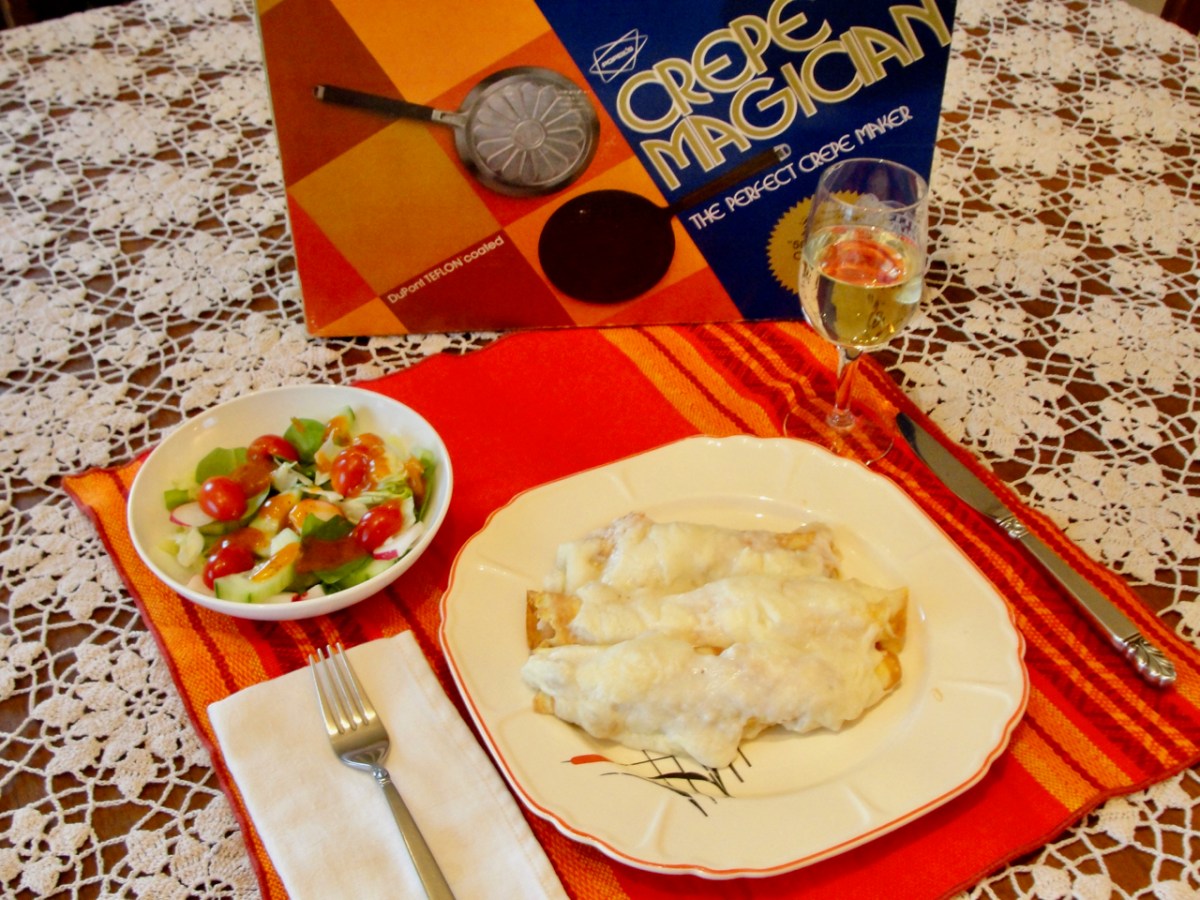
Imitation Crab Crepes Mornay

On a recent Sunday, when neither my wife nor I felt the need for a big Sunday dinner, I suggested that we try imitation crab crepes. When I searched for recipes on the web, I found plenty of crab and seafood crepe recipes, but they all called for real crab, shrimp, scallops or lobster. I like all of those treasures from the sea, but they are expensive, and we had just indulged ourselves at a nice restaurant the night before.

Since we enjoy an excellent Seafood Fettuccine that uses imitation crab or lobster, I thought that crepes with imitation crab would be worth trying. I was right, and imitation crab is about one-tenth the cost of the real stuff. Just give it a try.

One particularly nice thing about crepes is that you can make them in advance. Crepes keep well for a few days in the refrigerator or frozen for a couple of months. Microwave them for a few seconds before filling and rolling them. Cover them with sauce and bake them until the sauce is hot and bubbly. When you bring them out with a relaxed smile on your face, your guests will think you are a master chef.

If you don’t have any crepes in your fridge or freezer, you need to make some before starting the crab filling. Here is our recipe. Do this at least an hour before you plan on putting the crepes together.

Once you have ten crepes made, you can prepare the filling and make the Mornay sauce.

Mornay sauce is Béchamel (white sauce) flavored with cheese. This variety of Mornay sauce uses Swiss and Parmesan cheese, which goes well with seafood. Americans eat a lot of Mornay sauce without realizing it. They just call the dish “Mac and Cheese.” The Cheddar cheese used for macaroni and cheese gives a different flavor than the Swiss and Parmesan, but the creamy goodness is the same.

Here are the ingredients for filling eight to ten crepes.

8 oz. imitation crab
1 tsp. minced parsley
1- 2 scallions (a generous tablespoon chopped)
1 tsp. lemon juice

Here are the ingredients for the sauce.

2 cups milk
2 T butter
3 T all-purpose flour
1/4 tsp. white pepper
1/8 tsp. salt
1/2 cup grated Swiss cheese
2 T grated Parmesan cheese
1 to 3 drops hot sauce (optional)

PROCEDURE:

Chop the imitation crab into a quarter-inch dice and put it into a medium mixing bowl. Wash and mince the parsley and add it to the meat. Clean and chop one or two scallions into eighth-inch rounds. Put the onion into the bowl with the meat. Add a teaspoon of lemon juice and mix everything together.

Preheat the oven to 375º while you make the sauce.

Heat the milk until it is hot but not boiling. While the milk is warming, melt the butter in a one and one-half-quart sauce pan, blend in the flour, salt and pepper and cook the roux (the mixture of flour and butter) for about three minutes over low heat. Stir often with a wooden spoon. You are making a white sauce, so be careful not to brown the flour.

Use the spoon or a whisk to blend the hot milk with the roux. Raise the heat slightly and stir until you have a smooth, creamy sauce. The sauce should just come to a simmer and not boil. Cook for about three minutes after the sauce has started to thicken.

Gradually stir in the grated cheeses and taste the sauce. If your tastebuds tell you to do it, add a drop or two of hot sauce.

Stir half of the sauce into the meat. Grease a seven by eleven-inch glass baking dish.

Working on a plate, spread a scant two tablespoons of the meat mixture in a row on a crepe, roll it up and place it seam side down in the baking pan. Continue until all the crepes are in the pan. Spoon the rest of the sauce over the crepes.Seafood Crepes Mornay
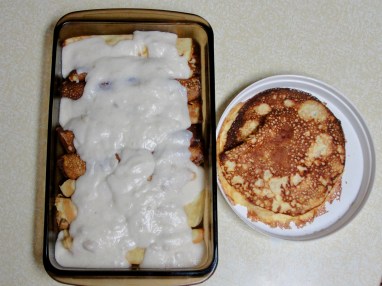
Bake uncovered for about twenty minutes until the sauce is bubbling and begins to turn slightly brown in a few spots.

Serve with a green salad and glass of white wine as a light dinner or lunch for three to four people.

Bucatini All’ Amatriciana

Despite the fact that my mother occasionally fed our family Chef Boyardee Spaghetti and Meatballs, I still like Italian foods. Actually, every few years I buy a can of the Chef’s meatballs and spaghetti to remind myself that it is really quite good. Not great, but a good choice for dinner alone at the cabin on a cold night.

Of all Italian dishes, I really like pizza and pasta. So do most Americans. About three billion pizzas are sold every year in the United States and according to a survey conducted by Oxfam a few years ago, pasta is more popular worldwide than any other food. It is more popular than meat or rice, two favorites in large areas of the world.

When you go to your neighborhood supermarket, you will find dozens of choices for pasta. Shells, macaroni, spaghetti, fettuccine, penne, rigatoni and lasagna noodles are available in almost every store. Bucatini is less common but well worth the search.

Bucatini is sort of like a thick hollow spaghetti. You can find it in ten or twelve-inch lengths like spaghetti or chopped into shorter pieces. That is the kind I have found locally. Bucatini holds the sauce well and, cooked to al dente, has a nice bite to it. If you can’t find bucatini, don’t let that stop you from making this recipe. You can substitute rigatoni or penne. Of course, then you should call it Rigatoni or Penne all’ Amatriciana.

Actually, the “Amatriciana” refers to the sauce, “sugo all’ Amatriciana,” which is said to have been invented in Amatrice, a small Italian town. Thus “Bucatini all’ Amatriciana” means roughly “Bucatini as they eat it in Amatrice.” Not all food historians agree, and Rome has tried to claim title to the dish, but whatever you call it, this simple dish almost certainly was invented by peasant farmers and shepherds in the mountains northeast of Rome.

More than half of the buildings in Amatrice were severely damaged or destroyed by the severe earthquake that hit the town of 2,650 people on August 24, 2016, and 234 people were killed. I first learned about this recipe because of the earthquake. Chefs around the world began cooking versions of bucatini or spaghetti all’ Amatriciana and donating the profits to earthquake relief. Some of the news stories included recipes, and I decided to try one. The recipe below is different from what I first read. It is simpler and probably closer to what was the original “sugo all’ Amatriciana.”

Here is what you do.

INGREDIENTS:
1/2 lb. pancetta, hog jowl or very thick sliced bacon
3 T olive oil
1 medium onion (3 inch diameter)
1 28 oz. can diced tomatoes
1/2 tsp. chili pepper flakes
Salt and freshly ground black pepper to taste
1 lb. bucatini
1/2 cup grated Romano or Parmesan cheese

PROCEDURE:

Bucatini all’ Amatriciana is traditionally made with pancetta, which is an unsmoked cured bacon made from hog jowl. Bacon and jowl in the United States are smoked. Therefore, unless you buy pancetta, you need to remove the smoked flavor from the meat. You won’t get it all out, but boiling water removes a lot of the smoky flavor. Here is how to do it.

If you were fortunate enough to obtain a piece of slab bacon or a hog jowl, cut slices that are about a third of an inch thick, then chop the slices into one-third-inch pieces. Otherwise, just chop your bacon into half-inch pieces. Heat a two-quart pan of water. When the water comes to a boil, put the meat into the water. Bring the pan back to a boil and cook the bacon for two minutes. Drain the water from the bacon.

Clean and chop the onion into a quarter-inch dice. Grate the cheese.

Put three tablespoons of olive oil into a three-quart saucepan and add the pancetta or bacon. Cook over medium heat until the meat is crisp but not burned. Remove the meat with a slotted spoon and set it aside.

Sauté the onion in the pan until it is translucent but not brown, then add the diced tomatoes along with the chili pepper flakes and about an eighth teaspoon of salt and pepper. Once the sauce is boiling, reduce the heat and simmer for about twenty minutes. Stir occasionally to make sure that it is not burning.

While the sauce is cooking, bring a large pot of water to boiling and add about a teaspoon of salt. Cook the pasta according to directions on the package, usually ten to twelve minutes or a little longer.

Just before the pasta is done transfer the sauce to a large skillet over moderate heat. Stir to make sure that it does not scorch. Taste and adjust the seasoning. Drain the pasta and stir it into the sauce along with the meat. Cook for about half a minute, then remove the skillet from the heat. Sprinkle on the cheese and mix well.

Serve with a glass of good Italian red wine, salad, bread and extra cheese for guests to add as they wish.

NOTES: Amatriciana sauce is traditionally made with Pecorino Romano, a hard Italian cheese made from sheep’s milk. It is one of the oldest Italian cheeses and descriptions by Latin writers of how farmers made this cheese are over 2,000 years old. You can find it in some specialty food stores or you can substitute domestic Romano or Parmesan cheese.

My wine of choice to serve with Bucatini All’ Amatriciana is Montepulciano d’Abruzzo, a hearty red wine made from the Montepulciano grape native to eastern Italy near Amatrice.

This recipe serves four to six diners.