When I was twelve or thirteen years old, my father took me one day for a long walk in the woods behind my Grandpa Hopp’s farm. As I remember we were hunting for grouse, but today I think that the real reason was that Dad wanted to teach me a little history. It was a beautiful fall day, the leaves were off the trees and it was easy walking through the mile of county forest between Grandpa’s farm and Crane Lake, part of the Chippewa Flowage.
I remember two things most clearly about that walk. The first were the huge stumps left from the “logging days” when lumberjacks were cutting the white pine forests that covered much of northern Wisconsin. When I asked why they cut the trees so far from the ground, Dad explained that the trees were cut in the winter and that the men were often standing on two or three feet of snow when they were working.
I found one of those pine stumps many years after that walk when I was fishing brook trout on the Marengo River. Here is a photo of my fishing partner Earl standing next to it.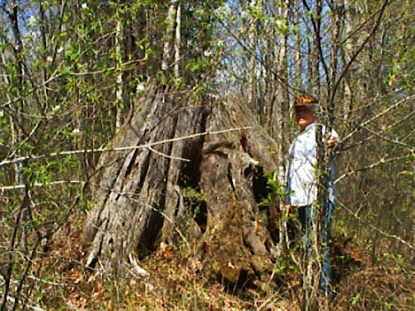
The second thing that I remember was the logging road that Dad showed me. It ran straight and nearly level through the woods. If he had not called it to my attention, I might have missed seeing it because there were big trees growing on it. In the summer, I learned, the loggers built roads to get the logs to water where they could be floated to sawmills. These men had smoothed the cradle knolls and built a corduroy road over a swampy spot. They had even dug through a ridge that must have been six or seven feet high. In the winter teams of horses or oxen moved the logs on sleighs pulled in iced tracks on these roads.
I don’t think that we brought home any grouse from that walk with my dad, but I am sure that we had meat for supper anyway. Except for breakfast, meat was part of nearly every meal. Sometimes it was only the meat from a pork hock in a pot of soup, but it was enough to satisfy the carnivore in us.
I do understand that farm animals contribute to the production of methane, a powerful greenhouse gas, so that reducing our consumption of meat is one small way of helping fight climate change. However, I am not ready to welcome “Meatless Mondays” as many people have, but I admit that I enjoy Cheese and Bean Burritos and some other vegetarian dishes today even though they are lacking what my father would have considered an essential ingredient of any supper dish.
I have also discovered that just a little bit of meat will go a long way if it is used creatively. This was my mother’s strategy when she made her boiled dinner. One pork hock flavored the vegetables and broth which was paired with homemade bread and a big piece of cake for dessert. It was an economical way to feed a big family.
This recipe for a hearty soup is one that my mother would approve. A half pound of meat is enough to satisfy four hungry diners when it is part of this delicious soup.
INGREDIENTS:
1/2 lb. lean beef
3 cups water
2 beef bouillon cubes
1 tsp. extra virgin olive oil
1/2 cup diced onion
1 T minced garlic (4 or 5 cloves)
1 can beef broth (2 cups)
2 or 3 Roma tomatoes
1 tsp. dried basil
1 tsp. dried oregano
Dash of ground cayenne (optional)
8 ounces ravioli (beef, mushroom or cheese)
3 cups baby spinach
1 T cornstarch in 1/4 cup cold water
Salt and freshly ground black pepper to taste
Grated Parmesan cheese
PROCEDURE:
Slice the beef into thin strips about an inch long and put them into a saucepan along with three cups of water and two beef bouillon cubes. Bring the pan to a boil, reduce the heat and simmer the meat until it is tender, forty-five minutes to an hour, depending on what cut of beef you use.
If the ravioli is frozen, allow it to thaw while the beef is cooking. Meanwhile, clean and chop the onion into a quarter-inch dice and set it aside in a small bowl. Remove the paper and stem ends from the garlic cloves and put the minced garlic in another small bowl.
Coat the bottom of a four-quart saucepan over low heat with a teaspoon of olive oil and cook the onion, stirring often, until it is translucent but not brown. Add the garlic and cook for about a minute, then stir in the beef and bouillon and the beef broth. Raise the heat to medium.
While the soup is heating, wash and remove the stem scars from the tomatoes and chop them into a quarter-inch dice. Stir them into the soup along with the basil, oregano and cayenne (if you wish). Bring the pan back to a boil and add the ravioli. When the pan returns to a boil, reduce the heat and simmer the soup for about ten minutes while you wash and coarsely chop the spinach.
Dissolve a tablespoon of cornstarch in a quarter cup of cold water and stir it into the soup when the ravioli is nearly done. Continue cooking for a minute or two, then add the spinach and gently stir the soup until the spinach has wilted.
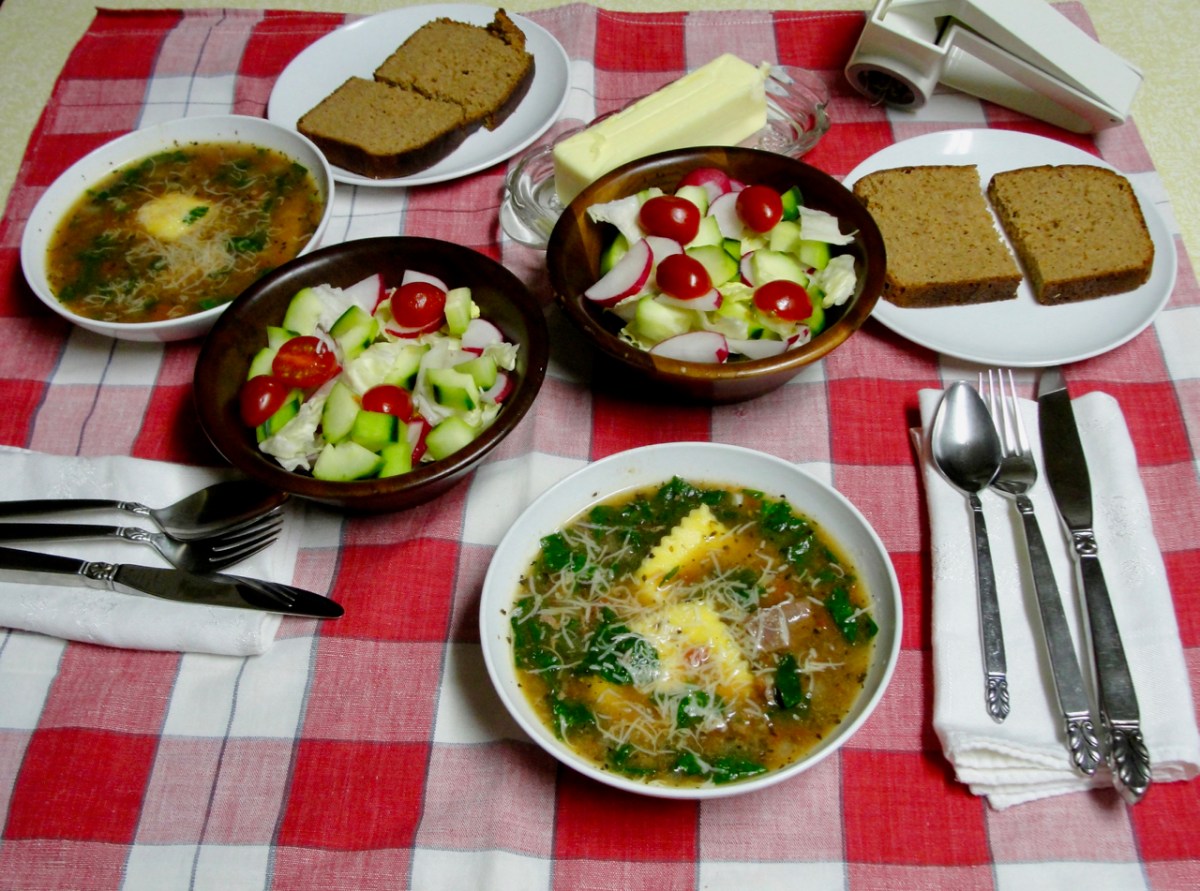
Taste and adjust the seasoning. You can add a little instant beef bouillon if the soup needs more salt. Serve with good bread and pass a cheese grater or a bowl of grated Parmesan.


 Courage in the Kitchen