A few week’s ago we finally visited Assi and her family in Helsinki, Finland. Assi was a Rotary Exchange Student in 1994 when I was the District Exchange Officer for Finland. Today she and her husband, Pekka, have a two-year-old daughter named Jenna. They work for Tieto, one of the largest IT services companies in Europe, which is headquartered a few miles from their home.
Knowing that I like to eat, Assi made a point of introducing us to Finnish cuisine. She served us Karelian stew, which she had prepared the day we arrived, and introduced me to 8% beer at the Suomenlinna, the fortress built on six islands at the mouth of the South Harbor in Helsinki. After our tour of the fortress we met Assi’s parents at the Fish Market where we enjoyed a delicious salmon soup.
Like many midwesterners I had a bias against fish soup. I don’t really know why, since I like clam and seafood chowders, which are really just thickened soups. Maybe it was my father’s story about working one day at a neighboring farm where they had fish soup for dinner. “They were Swedes, and they ate stuff like that,” he told me, adding that there were fish heads in the soup pot. It would be an understatement to say that it was “not his favorite.”
Assi and her parents told us that the salmon soup at the market was delicious, and so we all had styrofoam bowls filled with a rich soup. We ate it while sitting under a canopy and watched the ferries, fishmongers and their customers along the pier. It was a wonderful lunch, and I asked Assi later if she had a recipe for salmon soup.
She emailed me her family’s recipe for fish soup, which I converted to English measurements. Here is Assi’s introduction to the recipe:
“I will share our family recipe of a fish soup. You can use any kind of fish, also leave out cream as we quite often do when eating this at home.”
When I asked what kind of fish she used, she said that they used whatever they caught including pike (walleye), northern pike and bass from any of the freshwater lakes in southern Finland plus saltwater fish that they caught from the Baltic. I used some pieces of bony bass saved from one of Jerri’s catches from this summer plus a half pound of wild salmon fillets.
INGREDIENTS:
2 or 3 medium potatoes
1 medium onion
2 1/2 cups water
4 – 8 whole allspice
4 – 8 black peppercorns
1 lb. fish (fillet or with bones)
1 scant cup of whipping cream
1/2 tsp. salt
3 T fresh dill
Butter to taste
PROCEDURE:
Following Assi’s instructions, I first brought the bony pieces of bass to a boil in about two and a half cups of water in a covered saucepan and simmered them slowly for about twenty-five minutes. If you don’t have any bony pieces of fish, use fish stock and water. We didn’t have a pound of fish with the bony pieces, so I used two small salmon fillets to bring the amount of meat to a pound.
While the bony fish is simmering, peel the potatoes and clean the onion. Chop the potato into bite-sized pieces and the onion into a quarter inch dice. Cut the fish fillets into half or three-quarter-inch pieces. Set these chopped ingredients aside.
Use a slotted spoon to remove the pieces of fish from the water and let them cool on a plate for a few minutes. Separate the meat from the bones and set it aside in a small bowl. Be careful to remove all the small bones. Strain the water through a colander lined with cloth and return it to the saucepan.
Put the chopped ingredients and the meat you removed from the bones into the liquid. Add a half teaspoon of salt, the allspice and peppercorns. Cover the pan and bring the soup to a low simmer. Cook until the potatoes are tender.
Mince the dill while the soup is simmering and stir it with the cream into the soup. Heat it until it begins to steam. Taste and adjust the seasoning. I like to add a grind of black pepper at this point.
Serve in bowls with a dusting of fresh dill and a pat of butter melting on top.
NOTES: When I asked Assi to look over the recipe a few days ago, she said that they never count the allspice; they use what they think they need for the batch of soup.
Then she wrote, “Also black pepper corns can be used. Sometimes I use just black pepper from my pepper mill because it is close at hand. As you can see, we make the recipe while cooking. :-)” I like the smiley face. Think of it as a reminder that you can adjust the seasoning before serving.
If you don’t have any bony fish to make the stock, you could use Fish Stock Cubes or canned fish stock.
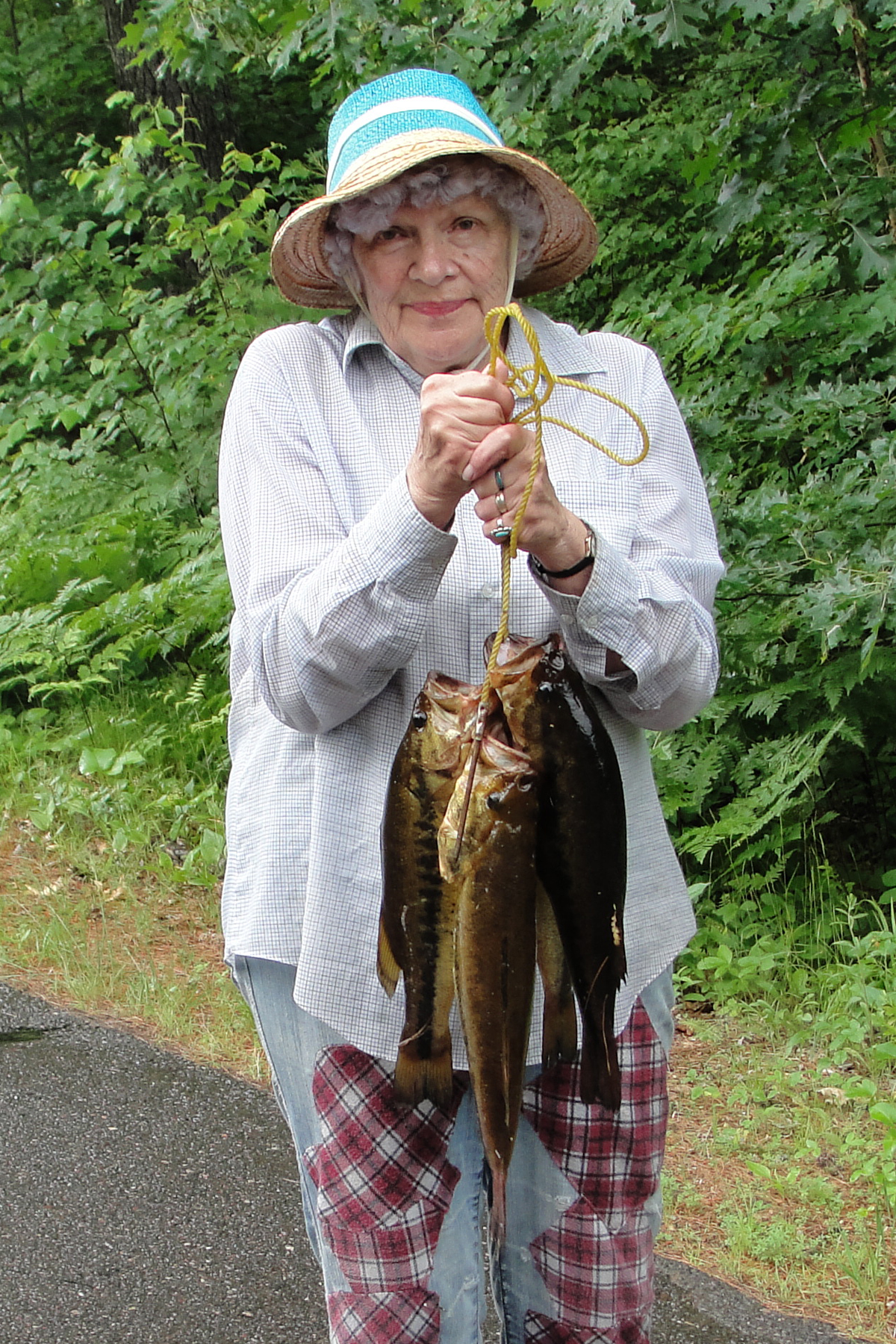
And finally, here is a photo of the bass that provided the bony pieces for my first batch of fish soup. Jerri caught all of them. I was skunked, but I was handling the canoe.
 Courage in the Kitchen