When the Laurentide Glacier retreated from northern Wisconsin about 10,000 years ago, it left behind the landscape we know today. At first the only plants were lichens, mosses and low shrubs now found much further north of us in the tundra regions of Canada. In the next few thousand years, larger trees appeared until Wisconsin was covered with the great forests of white and red pine that furnished the lumber to build houses in cities from Chicago, Illinois, to Dodge City, Kansas, as well as thousands of homes and outbuildings on farms in Wisconsin and across the great plains.
As glaciers retreat, their ice turns to water that deposits sand, gravel and rocks downstream from the face of the ice. If the water collects in rivers flowing from the glacier it can sculpt the land in very impressive ways. A first visit to Interstate Park on the banks of the St. Croix River at St. Croix Falls, Wisconsin, and Taylor’s Falls, Minnesota, left a lasting impression on me, as it does on most visitors. When Glacial Lake Duluth (more than 500 feet higher than Lake Superior today) dumped billions of gallons of water into the Glacial St. Croix River, the water carved more than a hundred potholes in the hard basalt “trap rock.” You can stand in some that are twenty feet across, and one that was excavated is nearly sixty feet deep, the deepest glacial pothole known in the world.
The glacier didn’t leave such spectacular evidence of its power in the Namekagon Valley, where I grew up. It formed the hills that border the valley and left some impressive landmarks such as Telemark, a kame formed by a glacial stream piling sand and gravel into a cone-shaped hill east of Cable, Wisconsin, where the American Birkebeiner starts each year.
The glacier left a lot of sand and rocks that I helped Gus Gauch pick from his fields when I was a boy. Our land didn’t have a lot of rocks, but it made up for it in sand. As long as it is mixed with organic material, sand is a good material for raising potatoes and corn. To mix the organic material with the sand, my father used the pioneer’s approach: Clear a half acre, plow the smaller brush and leaves under and fertilize with well-composted cow manure in following years.
Because the newly plowed field was filled with roots that had not yet decayed, Dad planted sweet corn the first year or two to let the roots decay enough so that a person could dig the potatoes. Thus we always had enough corn to supply our family for the year. He would plant the first eight or ten rows as soon as the ground had been plowed and disked. A week later he would plant the rest of the patch. That way we had plenty of corn on the cob for a couple of weeks and ripe ears ready for Mom to can over a two or three-week period for the winter.
Dad and I picked the first sweet corn of the season as soon as possible. He taught me how to feel the ears of corn to detect the full kernels that meant it was time for corn on the cob. “Not yet,” he would tell me. When the big day came, Mom would have the canner half-filled with water heating on the stove. Dad would pick the ears he judged ready. We did not shuck them at the corn patch, because he said the corn shucks attracted crows and raccoons.
Instead, we shucked the ears in the back yard and tossed the leaves into the chicken pen before taking the ears into the house. Mom knew how to boil them just long enough, and we all ate our fill of the first corn of the summer, usually with fried chicken or hamburgers and bread.
A day or two later, Dad would get me up at dawn to help pick corn for canning. The first couple of years, I found it exciting to be helping my father while my sisters were still asleep. We would load washtubs and a wash boiler and carry them back to the house. I felt like a grown-up then, but the excitement wore off as I grew up. Still, I enjoyed bringing in the corn with Dad every summer until I left for the university.
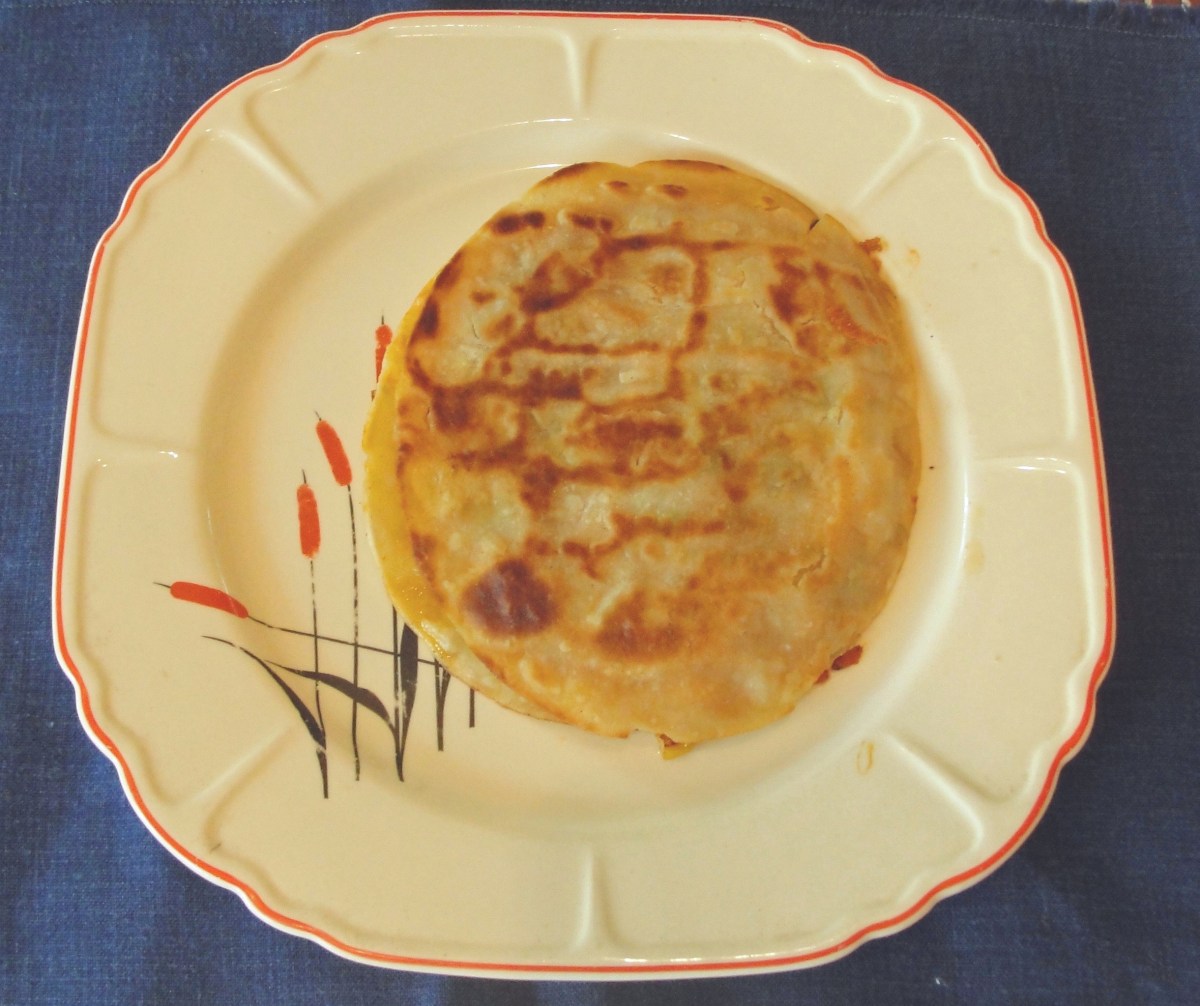
Mom, my sisters and I would help shuck the corn, and I helped my mother cut the corn from the ears. The corn was freshly picked, the kernels were carefully cut whole from the cobs and packed lovingly in pint jars. I think of those jars lined up on shelves in the basement whenever I make these vegetarian quesadillas.
INGREDIENTS:
8 oz. extra firm tofu
12 corn tortillas
1 tsp. vegetable oil
3/4 cup whole kernel corn
3 – 4 jalapeño peppers
1/4 cup chopped onion
1/4 tsp. salt
1 cup shredded Monterey Jack cheese
1/4 cup chopped cilantro
Medium salsa
Butter
PROCEDURE:
Start by baking the tofu. It’s easy and turns tofu into a great snack if you should have some left over. Here is a link which will take you to a post that explains how to bake it. Just scroll down to the bottom of the page.
While the tofu is marinating and baking, drain the corn and put it into a small frying pan with a teaspoon of vegetable oil. Clean and chop the onion and cilantro medium fine and add them to the corn. Wash and quarter the jalapeños, cut off the stem ends and remove the white membrane and seeds. Chop the peppers into a quarter-inch dice and add them to the other vegetables along with the quarter teaspoon of salt. Cook the vegetables, stirring frequently, over medium heat for four or five minutes until they just begin to get tender. Remove the pan from the heat.
Shred the cheese and make sure you have the butter and salsa at hand. Put a twelve inch skillet over medium heat. I find it easiest to make two quesadillas at a time in my skillet.
To assemble the quesadillas, butter four tortillas. Put two tortillas butter side down in the skillet. Spread a tablespoon of salsa over the tortilla, spoon a quarter cup of the vegetable mixture over the salsa and arrange four or five pieces of tofu on the vegetables. Top everything with a couple tablespoons of cheese and cover the cheese with the two other tortillas butter side up.
Cover the skillet and cook for two to three minutes until the tortillas are lightly browned. Press down on the quesadillas and turn them to brown the other side. Remove them to a cutting board, plate or platter and cut them into halves or quarters. Repeat until you have made all six quesadillas.
Serve as appetizers or for a light lunch or dinner.
 Courage in the Kitchen