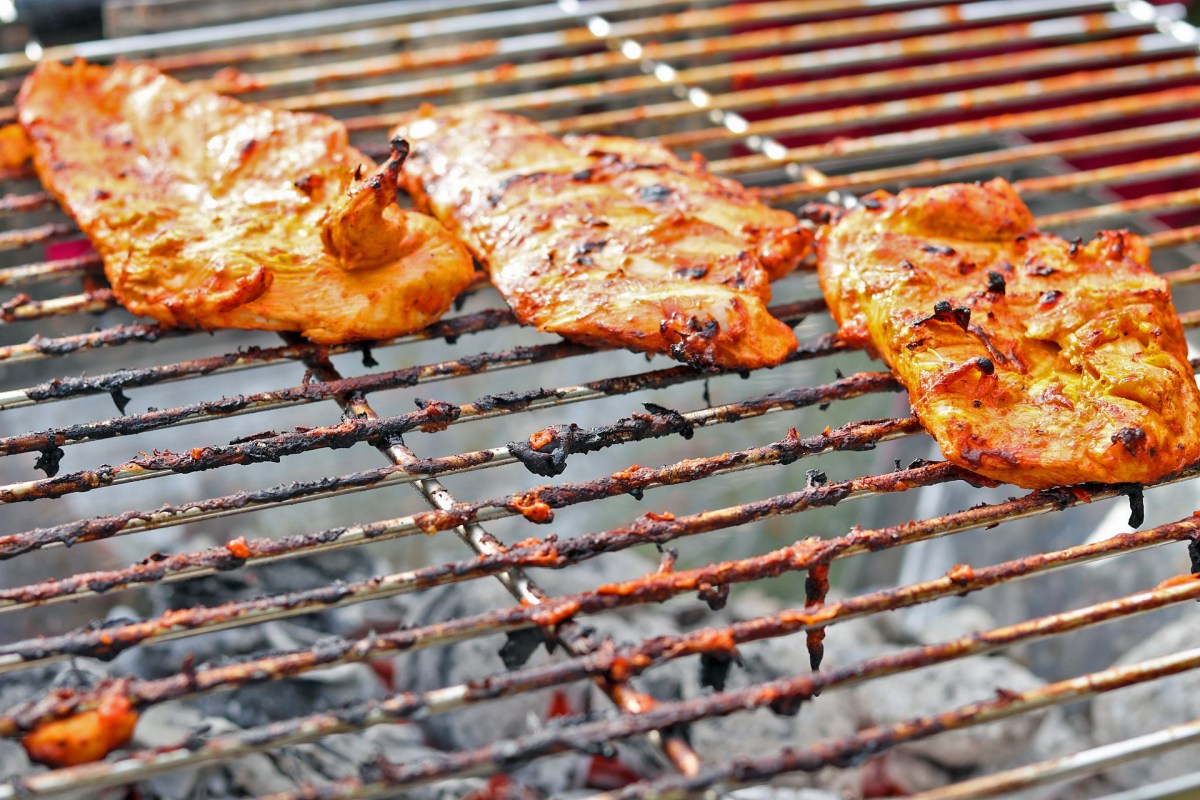
Grilled Chicken With White Wine Marinade

Whenever I see my wife or anyone else peel the skin from a nice piece of chicken, I think of Alexander Solzhenitsyn’s fine novel, One Day in the Life of Ivan Denisovich. A prisoner in a Siberian Gulag, Ivan is given barely enough food to survive. He cradles the sour bread in a rag, so he can catch and eat any crumbs, licks out his cereal bowl and savors the potato peel in his soup. Survival depended on husbanding every scrap of food.

The idea of removing and discarding the tender skin, filled with life-sustaining fat and taste-bud-tantalizing flavor would never have occurred to Ivan or for that matter, to anyone of our parents’ generation. Decent people did not waste food. When we balked at a particular dish, we were told to think about the starving children in China and to be thankful that we had enough to eat.

Fried chicken with the skin on is still one of my favorite foods. Done properly, the lightly breaded skin is crisp and wonderful. Broasted chicken is just as good, as long as the breading is not too thick. However, I have also come to appreciate the flavor and health benefits of skinless chicken when it is properly marinated and cooked.

Here is a recipe for chicken that is low in fat and calories but high in flavor. You need to let the meat marinate for an hour and a half or so, but other than that, this is another really simple dish to make.

INGREDIENTS:

2 lb. boneless skinless chicken thighs and/or breasts
3 T extra virgin olive oil
2/3 cup dry white wine
3 T lemon juice
1 tsp. salt
3/4 tsp. dried tarragon
1/4 tsp. freshly ground black pepper
1/8 tsp. powdered garlic
1/8 tsp. paprika

PROCEDURE:

Begin by making the marinade. Whisk the olive oil, wine, lemon juice and salt together in a glass or stainless steel bowl. Blend the tarragon, black pepper, garlic and paprika with a mortar and pestle and stir them into the liquid.

Rinse and pat dry the chicken. Split the breast pieces if they are over three-quarters of an inch thick. Put the meat into the marinade and turn the pieces to make sure they are covered with the marinade. If necessary, you can add a little more wine.

Refrigerate the bowl for about an hour and a half, turning the meat every fifteen or twenty minutes.

Have the charcoal ready or gas grill hot when the chicken is marinated. I like to use some apple or maple wood to add a hint of smoke flavor to the finished chicken.

Grill over moderate heat for ten to fifteen minutes, turning often.

Serve with your choice of vegetable and salad.

NOTE: I think that sauvignon blanc is the perfect wine for this recipe.
Green Beans With Scallions and Almonds

In 1958 twin brothers Bernie and Bruce Paulson from Cambridge, Wisconsin, invented a machine destined to put thousands of children and their mothers out of work. In 1960, they accepted the offer of a free building in Clear Lake, Wisconsin, where they began manufacturing Pixall Bean Pickers.

Soon the summer social gatherings of bean pickers were replaced by tractors pulling machines that could not sing, keep up with local news, and celebrate the champion picker of the day. I was one of those bean pickers in the early 1950’s, and I now value those memories. I am sure that the memories are better than the actual work of picking beans in the hot sun, but I recall the satisfaction I felt as I filled and tagged each mesh bag.

One summer we were picking for Mr. Vallem, who had a contract to supply beans to the cannery in Cumberland, Wisconsin. I would try to guess the weight of the bags as I carried them to the end of the row. We earned three and half cents a pound for green beans, so a twenty pound bag meant seventy-five cents in my pocket.

Mr Vallem called an end to picking for the day about 4:30 in the afternoon, collected the remaining bags from the field and stacked them next to the scale. It was what we called a Fairbanks barn scale, with a platform base where bags of beans were placed and a balance arm with weights to measure the weight of the bags.

We pickers gathered to learn how many pounds we had picked and to collect our wages. Mr. Vallem would tell his clerk the name on the tag and announce the weight of each bag. The weighing went faster if several bags by the same picker were weighed together, so we tried to gather our bags in a pile to be put on the scale at one time.

I remember one day when I was assigned two rows loaded with beans and had my very best day in the bean field. When I gathered my bags together I was sure that I had over a hundred pounds of beans, which meant big money to a ten year old in 1953. When Mr. Vallem added a hundred pound and then a fifty pound counterweight to the scale, I was in heaven. Over five dollars in my pocket!

Picking beans is hard work, and many of my memories of time spent in bean fields are not very positive, but I still love eating this wonderful vegetable domesticated by native Americans thousands of years ago. Columbus brought green bean seeds back with him when he returned from his second voyage to the New World in 1493. He explained how they were grown in Cuba and soon they were being cultivated throughout Europe. Today they are the most popular edible pod bean in the United States.

There is a reason for that. Here is a simple way to dress up a pound of green beans that will show you just how good they taste.

INGREDIENTS:

1 1/4 tsp. salt, divided
1 lb. green beans
3 – 4 scallions
2 garlic cloves
2 T chopped parsley
1/2 – 2/3 cup slivered or sliced almonds
2 T extra-virgin olive oil
1 tsp. crushed dried oregano
1/4 tsp. freshly ground black pepper

PROCEDURE:

Wash and remove the stem ends from the beans. Clean, remove the root ends and chop the scallions into eighth-inch rounds, using all the white and half the green parts of the scallions. Remove the paper and stem ends from the garlic and mince the cloves. Set the scallions and garlic together aside in a small bowl. Wash and finely chop the parsley and set it aside as well.

Put three or four quarts of water in a large saucepan or Dutch oven over high heat and add a teaspoon of salt to the water.

Put the almonds into a small skillet over moderate heat, toast them lightly and set them aside in a small bowl while the water is coming to a boil.

Put the beans into the boiling water and cook them for six to seven minutes until they are tender but still crisp.

While the beans are cooking, put two tablespoons of olive oil into the small skillet and sauté the scallions and garlic for three to five minutes until they are translucent.

Drain the beans in a colander and put them into a large mixing bowl. Stir the scallions and garlic, a quarter teaspoon each of salt and pepper, the oregano, parsley and almonds into the beans. Taste and adjust the seasoning. You may want a little more salt.

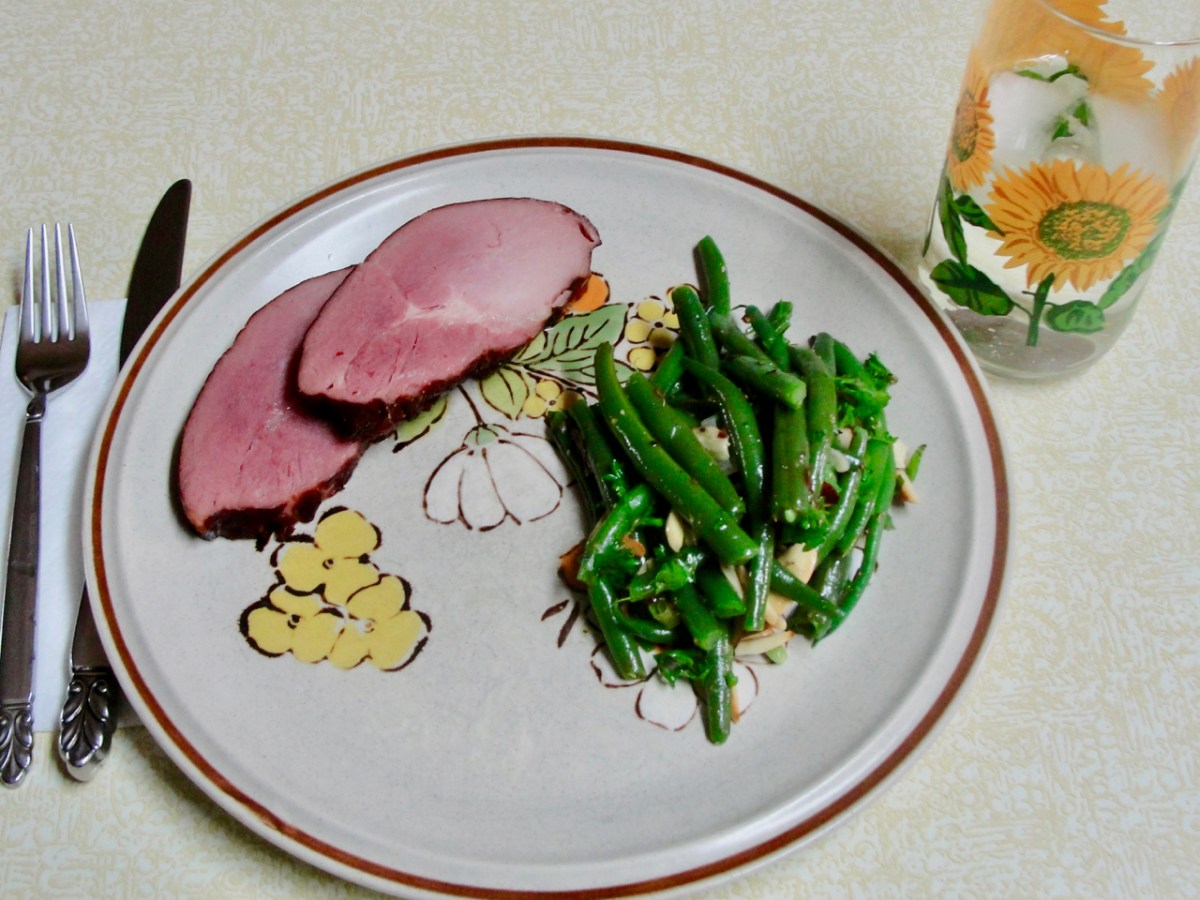
Serve hot with meat or any other main dish.

NOTES: Be careful not to overcook the beans. You want them crispy and bright green.

I like to snap the longer beans in half as I wash and put them into a colander, but you may prefer the appearance of the whole beans.

If you have an herb garden, you can substitute a tablespoon of finely chopped fresh oregano for the dried.